

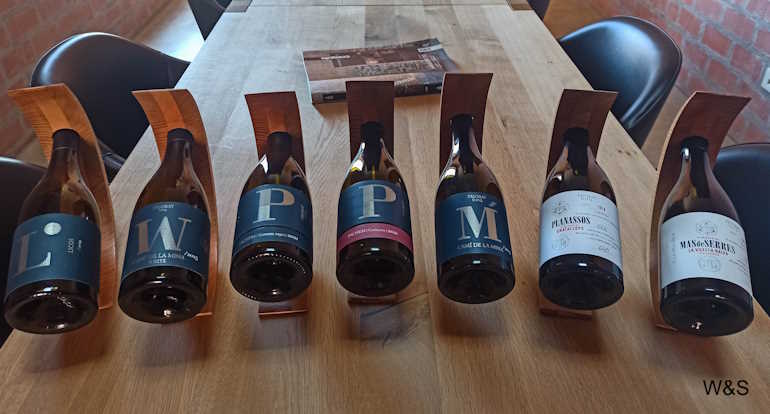
By building the innovative boutique winery Clos Pachem in Gratallops, Michel Grupper set a very high-quality standard for his wines. He simply cannot afford to produce ordinary supermarket wines there. The wines of Clos Pachem must live up to the standards of a winery of this caliber. And he has succeeded. These are very interesting wines that deserve the attention of wine connoisseurs and enthusiasts.
The Philosophy Behind the Wines
The “Clos Pachem” wines aim to reflect both the landscape and the people fascinated by the Priorat soils and climate. Without abandoning the terroir´s strength, our wines intend to embody the most subtle attributes of the Priorat,” says the founder of Clos Pachem.
This explains why the winery has almost entirely abandoned barrel ageing. But it was also important to find a winemaker who shared the same vision of Priorat wines. Josep Riba Comaposada, Head of Oenology and Viticulture, explained:
We interpret the characteristics of each vintage, each vineyard plot and each grape variety, following the philosophy that ‘less’ means ‘more’ and recognizing that we are dealing with a powerful yet demanding terroir. Every day, we continue to discover Priorat through an integrated project that brings together wine, architecture, landscape and people, all with the deepest respect for life.”
The Tasting
As I had very little time for the tasting, my descriptions of the wines’ aromas are certainly not exhaustive. I am convinced that these wines are much more complex and that readers will find plenty more to discover in them.
Licos, 2023 DO Terra Alta
Made from 100% organically grown Garnacha Blanca grapes cultivated in Gandesa, in DO Terra Alta, on clay-limestone soils that are particularly well suited to white wine production. During the 12 months preceding the harvest in August 2023, only 330 mm of rainfall was recorded, making it a dry year. The grapes were harvested in two stages, allowing the winemaker to work with berries at different levels of ripeness.
As a result, two wines were produced from the same vineyard and subsequently blended to create a fresh and balanced “Licos”.
The must was fermented in stainless-steel tanks under controlled temperature conditions. The wine was then aged in stainless-steel tanks for eight months.
The wine is pale straw in colour, with a bright sheen. Its nose reveals notes of green apple, white peach, grapefruit, aromatic herbs and delicate floral nuances.
“Licos” has a fairly full body for a white wine, with a slightly creamy texture. As it turned out, it had been aged on fine lees for two to three months. What is truly surprising is how salty this wine tastes! It is the saltiest wine I have ever tasted. The palate also reveals a subtle minerality, freshness and hints of grapefruit, which give way to lemon in the long finish. Alcohol content: 13.5%.
In my opinion, the wine’s flavour suggests the perfect food pairing for “Licos”: oysters drizzled with lemon juice.
A very interesting wine that expresses the Garnacha Blanca grape variety beautifully.
“Licos”, 2023 is available at the winery for €17.
The renowned British wine critic and Master of Wine Tim Atkin named “Clos Pachem Licos”, 2023 “Value White Wine of the Year” in his “Catalunya 2026 Special Report”, also awarding it a Medal of Excellence.
Camí de la Mina White, 2025 DOQ Priorat
A new blend of Garnacha Blanca (70%) from young vines and Macabeu (30%), from vines more than 60 years old. The vineyards are located in Torroja, in Priorat, on llicorella soils rich in slate.
Each grape variety was vinified separately in 1,000-litre vessels, allowing the characteristics of the grapes’ origin and the character of each terroir to be preserved. The process involved 24-hour maceration of the must on the skins, followed by pressing and the spontaneous start of fermentation. Once fermentation was complete, the wine was aged on fine lees for approximately two months.
Although this wine shares Garnacha Blanca with the previous one, its profile is completely different.
The wine is light straw-coloured, with a greenish hue and a bright sheen. The nose is fresh and fruity, revealing notes of apricot, tropical fruits, lime, white peach and aromatic herbs.
The palate is fresh, with more pronounced acidity than the first wine, and mineral, with hints of apricot stone and lime zest. The lime zest note lingers in the long finish. An elegant wine. Alcohol content: 14%.
Only 800 bottles were produced. The winery price is €29.
Pachem Garnatxa, 2021 DOQ Priorat
In 2021, the vines in Priorat received sufficient moisture (there was plenty of snow in winter), and the harvest was of good quality.
The Garnacha grapes for this wine were harvested from several vineyards located in Lloar, Gratallops, Torroja and Poboleda. This allowed the winemaker, much like an artist, to draw on the distinctive characteristics of different terroirs to create the picture he had envisioned. As a result, “Pachem Garnatxa” became a typical expression of the Garnacha variety from Priorat, but in its most refined form.
The grapes from each plot were processed and fermented separately in stainless-steel tanks under controlled temperature conditions. Fermentation of the must on the skins took place spontaneously. During this process, gentle pump-overs were used to ensure delicate extraction. Alcoholic fermentation lasted 15 days, after which malolactic fermentation started naturally in the ageing tanks. The wine was aged for 12 months in concrete vessels and stainless-steel tanks to preserve its fruit character.
The wine is ruby-red in colour, not particularly intense. The bouquet features aromas of cherry, strawberry and other red berries (which I could not identify at the time), orange zest, allspice, graphite and delicate floral notes.
The palate is fresh, with lively acidity, fruity, with soft tannins and a subtle minerality. The fruity finish is long. Alcohol content: 14%, although the alcohol does not stand out despite this relatively high level. “Pachem Garnatxa”, 2021 is a beautiful, elegant wine. It costs €19 at the winery.
Last year, American wine critic James Suckling awarded this wine 95 points.
Pachem Carinyena, 2023 DOQ Priorat
This wine is made from 100% Carinyena grapes grown in two vineyards, in Torroja and Poboleda. The vines are 30-40 years old. Grapes from the different terroirs were vinified separately. Fermentation of the must on the skins took place spontaneously in stainless-steel tanks under controlled temperature conditions. During this period, gentle pump-overs were used to achieve better extraction. Malolactic fermentation started naturally. The wine was aged for 12 months in egg-shaped concrete tanks.
Its colour is ruby with a slight violet hue. The bouquet reveals aromas of black berries, including blackberry, cherry and blackcurrant, as well as violet, clove, liquorice, grapefruit zest, fine leather and a subtle smoky note.
The palate offers hints of black berries and aromatic spices, with a touch of minerality. The tannins are ripe and slightly sweet. Alcohol content: 14%, well integrated. This wine is more complex than the previous one, and it is still very young.
The winery price is €22.
Camí de la Mina, 2020 DOQ Priorat
A blend that brings together the two most popular grape varieties in Priorat, Garnacha and Carinyena, in equal proportions. The grapes were harvested from 40-year-old vines growing on llicorella (slate) soils in Gratallops and sandstone soils in Torroja. Each variety, from each individual plot, was vinified separately in stainless-steel tanks.
Fermentation took place spontaneously, using wild yeasts, and was accompanied by gentle mixing to achieve careful, soft extraction. Malolactic fermentation also took place. The wine was aged for 12 months: the Carinyena in French oak barrels (foudres), and the Garnacha in 1,000-litre ceramic amphorae. Thanks to the partial ageing in oak barrels, “Camí de la Mina”, 2020 comes closer to the classic style of Priorat wines, while remaining fresher and more approachable.
The wine is medium-intensity ruby-cherry in colour. The bouquet is complex and expressive, with aromas of the foamy top of strawberry jam cooked over a fire, overripe cherry, prunes, cinnamon, aromatic herbs, violet and smoky nuances.
The palate is fruity and juicy, with hints of spices and pronounced minerality. The tannins are velvety and slightly sweet. The finish is long and fruity. Alcohol content: 14%.
“Camí de la Mina”, 2020 is available at the winery for €37.
James Suckling awarded this wine 93 points, while it received 94 points at the Decanter World Wine Awards` 2024.
Planassos, 2021 Vi de Paratge, Gratallops DOQ Priorat
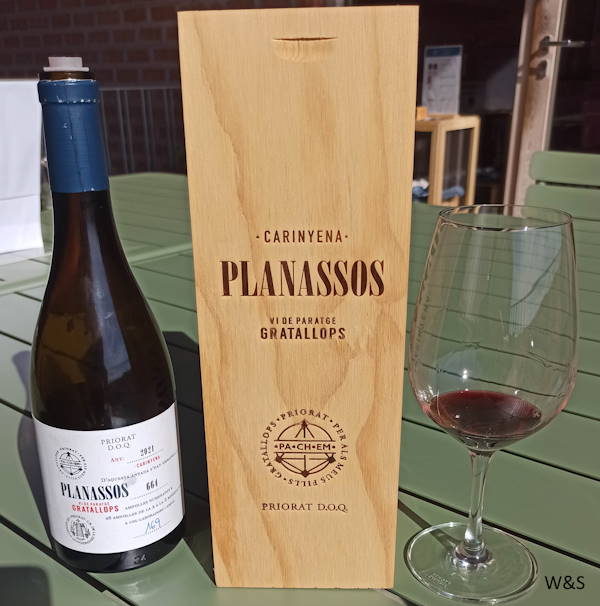
This wine is made from 100% Carinyena grapes, from 80-year-old vines. Spontaneous fermentation of the must on the skins took place in a 1,000-litre vessel under temperature control. Maceration lasted 14 days, during which manual punch-downs were carried out to achieve delicate extraction. Malolactic fermentation followed. The wine matured for 12 months in a 500-litre ceramic “egg”, from which 664 bottles of “Planassos”, 2021 were bottled. The wine then underwent a further 12 months of bottle ageing.
This Carinyena is ruby-red in colour, with violet reflections. The bouquet is expressive and intriguing, revealing aromas of pomegranate, cherry, prunes, violet, liquorice, clove, cinnamon, orange zest and graphite.
The palate is soft, with a silky texture and hints of ripe dark fruit and spices. The finish is long, with numerous layers of flavour. Alcohol content: 13.5%. Decanting this wine is recommended to allow it to reveal more of its character.
In May 2026, Tim Atkin awarded this wine 93 points. Its price at the winery is €110. “Planassos” is sold in a wooden presentation box.
Mas de Serres, 2022 Vi de Paratge, La Vilella Baixa DOQ Priorat
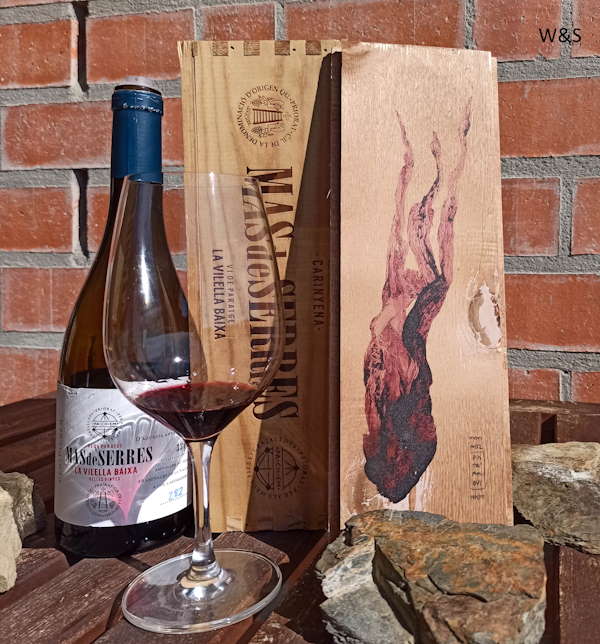
And “Clos Pachem”’s ultimate TOP wine is also made from Carinyena. The vines are more than 100 years old! The one-hectare vineyard is located in La Vilella Baixa, within DOQ Priorat. It is planted on a steep, north-east-facing slate slope. Carinyena does not occupy the entire area but grows alongside other grape varieties and trees, including almond, olive and walnut trees. The soils are predominantly slate, with some sandstone. The plot is cultivated using regenerative and biodynamic farming methods.
The 2022 harvest was the first vintage of this wine. It was a hot, dry year, which affected vine development: shoot growth was restricted and yields were reduced. As a result, only 420 kg of Carinyena grapes were harvested. The berries contained less juice than usual and were more concentrated.
The grapes were vinified in a 500-litre vessel under controlled temperature conditions. Fermentation of the must on the skins took place spontaneously, with manual punch-downs used throughout the process to ensure delicate extraction. Malolactic fermentation started naturally. The wine was aged for 12 months in a single spherical ceramic vessel with a capacity of 250 litres.
The wine has a ruby-cherry colour. Its delicate, beautiful bouquet reveals aromas of sloe, blackberry, cherry, plum, violet, liquorice, spices and graphite. Aeration is recommended to allow more of its aromas to unfold (decanting is advisable).
The palate is concentrated and vibrant, with soft tannins, hints of black berries and a mineral note. The finish is long and delicious, with a subtle saltiness. Alcohol content: 14%. The wine is still very young, but has considerable ageing potential. At least ten years, certainly.
A total of just 334 bottles were produced. “Mas de Serres” is available from the winery shop for €220. The bottle comes in a wooden presentation box.
Conclusion
“Clos Pachem” has introduced the world to a different side of Priorat wines. They are less classical in style, but lighter and more approachable, while remaining sufficiently concentrated. The wines of “Clos Pachem” have replaced Priorat’s familiar power with greater elegance, refinement and freshness.
At the same time, the winemaker strives to express the distinctive characteristics of the grape varieties and the terroirs in which they grow. And he succeeds. These wines are ready to drink now, without the need to wait years for them to mature. They are exceptionally approachable, yet possess considerable potential for further development and ageing.
Related articles:
“Clos Pachem” is one of the new wave of Priorat wineries
DOQ Priorat: From Abandoned Vineyards to Iconic Wines
P.S.: If you enjoy the wine-and-spirits.md website, you can help support its work financially via patreon or PayPal (angeltar387@gmail.com).
