
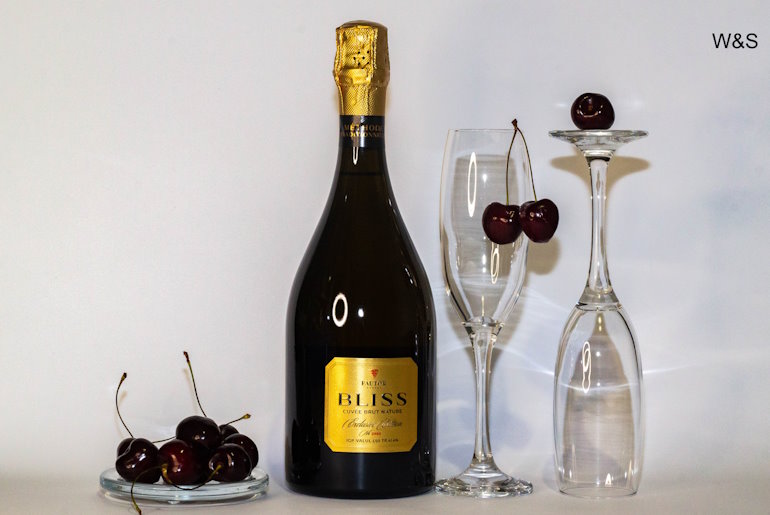
Fautor Winery has launched its very first sparkling wine – Bliss Cuvée Brut Nature Exclusive Edition IGP Valul lui Traian, produced using the Méthode Traditionnelle (traditional method), with 32 months of bottle ageing on the lees. The blend combines two grape varieties – Fetească Regală and Rhine Riesling. This wine has elevated Fetească Regală to an entirely new quality level in Moldova.
The Creative Journey
Bliss was not born easily. The base wines from the first two harvests intended for the future sparkling wine were never bottled for the second fermentation, as the Fautor team felt they lacked the character they were seeking. It was only in the third year, using the 2022 vintage, that they finally decided to take the risk—and it proved to be the right decision. The wines produced from the two selected varieties turned out to be truly exceptional.
Yet this wine might never have existed. In Moldova, tirage for traditional-method sparkling wines is usually carried out at the beginning of the year so that the base wine remains as fresh as possible, since no sulphites are added before bottling. At Fautor, however, bottling for the traditional method was delayed until September. As a result, several specialists advised against proceeding and recommended waiting for the following harvest instead.
Production Director Tatiana Croitoru, however, believed that both wines had been preserved beautifully and possessed exactly the characteristics required for the intended blend. Against expert advice, she chose to continue pursuing the project.
When creating this blend of Fetească Regală and Riesling, it was extremely important for me not to cross the fine line where Riesling supports Fetească Regală without overshadowing it. At the same time, Riesling preserves the wine’s vibrant acidity and freshness. Finding the perfect proportion between these two varieties required remarkable precision and sensitivity. Even the slightest adjustment in either direction would have disrupted the harmony between them. We finally settled on a 70/30 blend. However, this does not mean future releases will follow the same ratio, because every vintage gives the grapes a unique character.
Another challenge was simply waiting while the wine matured in bottle and wondering what the final result would be. Besides the time investment, maintaining a constant cellar temperature required considerable resources. The first disgorgement was carried out after 32 months, while the remaining bottles are still ageing and will be released in two additional editions. Throughout this period, we tasted the wine regularly and gradually realized that it possessed tremendous potential,” says Tatiana Croitoru.
For a traditional-method sparkling wine, 32 months on the lees is a considerable ageing period. Only a handful of Moldovan sparkling wines spend such a long time developing on their lees.
For the Fautor winemaking team, however, the goal was never to reach an impressive number of months. What truly mattered was waiting until the bouquet clearly expressed the distinctive aromas of brioche and the other complex notes created through extended lees ageing.
A Wine That Stayed True to Its Nature
One of the defining characteristics of this wine is its high acidity – 6.9 g/l, which gives it exceptional freshness and vibrancy both on the nose and on the palate. The residual sugar is just 0.9 g/l (although the label states 1.3 g/l).
Bliss Cuvée is beautiful in its natural expression, which is why it was released as a Brut Nature. Although several internationally renowned wine experts who tasted it before its commercial release suggested adding a dosage liqueur to increase the sugar level to around 6–7 g/l, the Fautor winemakers chose not to follow that advice.
Fortunately, they did not allow the prestige of those famous names to influence their own vision of the wine. To confirm they had made the right decision, the winery organized a comparative tasting of Moldova’s finest traditional-method sparkling wines alongside Bliss.
Served as a Brut Nature, Bliss stood out for its remarkable purity. On the palate there was a barely perceptible hint of sweetness—not from added sugar, but from the compounds naturally created during fermentation and prolonged lees ageing. Combined with its elegant acidity, this subtle sweetness created remarkable finesse and balance.
Tatiana Croitoru recalls:
We realized that our wine deserved to be released as a Zero Dosage sparkling wine. Nature does not bless us every year with grapes capable of producing such a fresh and vibrant sparkling wine. When such an opportunity comes, there is no need to add anything. We should leave it exactly as we feel it should be—this is the wine we love.”
Why “Bliss”?
The English word “Bliss” conveys happiness, delight, and perfect pleasure. The name was created by Ruxanda Lipcan, Fautor’s Marketing Director. She explains:
Besides the meaning of the word itself, we were fascinated by the way it sounds. When you pronounce ‘Bliss’, the prolonged ‘s’ resembles the gentle hiss of sparkling wine bubbles. It immediately creates a festive mood and the anticipation of pleasure.
For speakers of many different languages, Bliss is easy to pronounce, elegant and memorable. Once people understand its meaning, it naturally evokes the image of a premium product that creates an atmosphere of celebration, comfort and enjoyment. It is a remarkably expressive and compact name.”
Without question, Bliss is an outstanding branding achievement. The name also fits perfectly on the small label adorning the bottle.
Design That Reflects the Wine
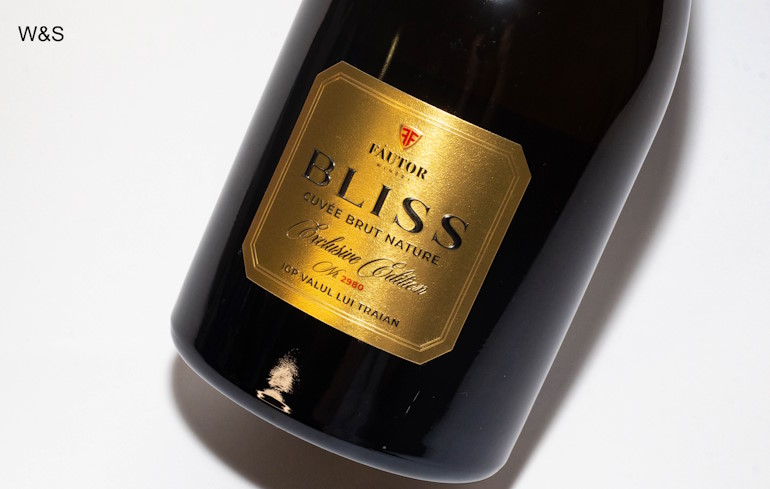
Over the years, I have noticed that Fautor devotes exceptional attention to the presentation of every wine it produces, and Bliss is no exception. Selecting the perfect label required extensive experimentation. More than 50 different designs were tested before the team finally placed a small square label on the bottle and immediately realized they had found the perfect solution.
The elegant metal label gives the bottle a refined contemporary appearance. However, because of its unique production technique, each label must be applied by hand, requiring the winery staff to receive special training.
It must be said that this label is simply perfect for the chosen bottle. It expresses the very essence of the wine itself. In fact, it would deserve to compete in an international wine packaging and design competition
What’s in the Glass?
The wine displays a very pale lemon colour.
In a flute glass: as the wine is poured, it develops a beautiful, abundant mousse. Its tiny, persistent bubbles are immediately captivating. The first aroma to emerge is brioche.
Even within the narrow bowl of a flute, the bouquet is remarkably expressive, revealing aromas of:
- apple;
- white flowers;
- brioche;
- quince;
- chamomile.
In a Universal Wine Glass: despite the wider bowl of the glass, the wine forms an impressive snow-white crown of foam that rises all the way to the rim—an uncommon feature even among high-quality sparkling wines. The first impression on the nose is dominated by fresh fruit and brioche.
As the wine opens, the bouquet becomes increasingly complex, revealing layers of:
- brioche;
- dried rose petals;
- garden flowers;
- toasted crust of freshly baked rye bread;
- dried apricot;
- quince;
- apple;
- chamomile (more restrained than in the flute glass);
- peach pit;
- pineapple peel;
- dried herbs;
- delicate sweet pastry notes.
These aromas seem intricately woven together, while a fine, pure lime fragrance gradually emerges through the bouquet, adding remarkable freshness and elegance.
The palate is exceptionally fresh, vibrant and beautifully balanced. A lively acidity is accompanied by delicate notes of:
- lime;
- toasted rye bread crust.
These flavours continue into a long, elegant finish, where they gradually evolve into nuances of:
- almond;
- lime zest.
There is indeed a very subtle natural sweetness on the palate, harmoniously integrated with the wine’s refreshing acidity. How fortunate that no expedition liqueur was added at disgorgement. Any additional sweetness would have masked the wine’s remarkable purity and precision. The wine has an alcohol content of 12%.
Only 2,980 bottles were produced. The bottle tasted for this review was No. 0761.
Summary
Although Fetească Regală is considered an aromatic grape variety, it expresses itself here with remarkable delicacy and restraint. It was fascinating to discover this variety in a traditional-method sparkling wine that spent such a long time ageing on its lees.
Bliss is the first wine in Moldova produced using the Méthode Traditionnelle in which Fetească Regală has remained on the lees for as long as 32 months. Most likely, this experiment proved so successful thanks to the perfect support provided by Rhine Riesling, which enhances rather than dominates Fetească Regală.
Nevertheless, the wine has revealed a side of this grape variety that had never before been fully appreciated. The final result is an exceptionally elegant sparkling wine.
Bliss is also Moldova’s first traditional-method Brut Nature sparkling wine bearing an IGP (Protected Geographical Indication). Everything came together perfectly in this wine:
- nature provided an extraordinary grape harvest;
- Fetească Regală and Rhine Riesling formed a beautiful partnership;
- the winemakers transformed that potential into an outstanding sparkling wine;
- the name and packaging perfectly reflect the character of the product.
All that remains for us is simply to enjoy Bliss.
Where to Buy
Bliss Cuvée Brut Nature Exclusive Edition is available at:
- the Fautor Winery Shop in Chișinău (23/2 Petru Movilă Street);
- Invino, Vin cu Vin, Wine.md, Carpe Diem, and the online wine shop vincuvin.shop;
- the restaurants Gastrobar, Fuior, Altă Mare Gastrobar, Vino Pizza, BERD’S, and Hanul lui Vasile.
The list of retail and HoReCa partners will continue to expand. The wine will also be launched in Romania in the near future.
Retail Price
- Fautor Winery Shop (Chișinău): 800 MDL
- Gift box edition: 850 MDL
- Wine boutiques: 960–1,000 MDL (without gift box)
