

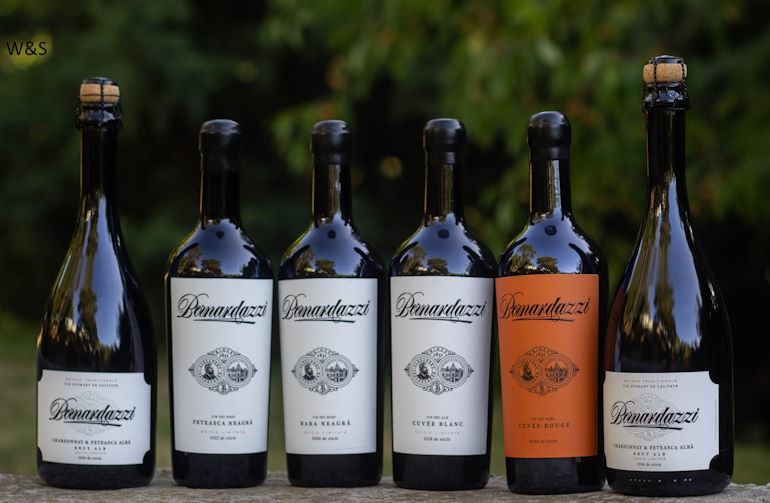
The new Bernardazzi range from Novak Winery not only presents wines in a style unusual for this producer; two of the six wines will also never be repeated in subsequent releases. They can be enjoyed only from the one small batch that has reached the market. Different wines will take their place in the future.
Why Bernardazzi?
The wine series is named after the architect Alexander Iosifovich Bernardazzi, who did much to shape the appearance of Chișinău in the 19th century. He was the city architect and a member of the Bessarabian Construction Commission, and his influence extended beyond the buildings he designed. He was also involved in laying out and paving streets, and even designed and built the city’s water supply system.
Winemaker Andrei Novak decided to pay tribute to the great architect through another art, winemaking, because harmony lies at the heart of both.
An architect’s creation reflects the beauty of his world, while wine reflects the winemaker’s soul. One is made of stone, the other of grapes. At first glance, they have nothing in common. Yet whatever is born of them captures a moment in time: the moment in which the people who brought them into being lived.
On 1 December 1875, the Chișinău City Duma unanimously elected Alexander Bernardazzi an honorary citizen of Chișinău, marking the 25th anniversary of his work as an architect. And in 2025, 150 years later, some of the finest wines created in the sunny land to which Bernardazzi devoted most of his professional life were named after him.
His architectural legacy remains not only in Chișinău, but also in Hîncești (the Manuc Bey estate), Ungheni (the Alexander Nevsky Church, for which he prepared the design free of charge), the village of Ustia in Orhei District (a church for Prince Manuc Bey), Codru (the Costiujeni Psychiatric Hospital), the Bender–Galați railway with all its station buildings, the Catholic chapel in Bender, and elsewhere. Even after moving to Odesa, Alexander Iosifovich continued to work on buildings for Chișinău and other parts of Bessarabia.
The winemaker’s secrets
Since time is not merely symbolic in either architecture or winemaking, but also plays an active role in the creative process, all Bernardazzi wines have been aged and are intended for long-term ageing.
The range includes two traditional-method sparkling wines. Alexander Bernardazzi’s great talent deserves a toast with this noble, celebratory drink. Bernardazzi sparkling wine is worthy, in terms of quality, of the great architect being honoured, and will undoubtedly appeal to lovers of fine classic sparkling wines.
The only still white wine was made in the finest traditions of classical winemaking and aged in 500-litre oak barrels.
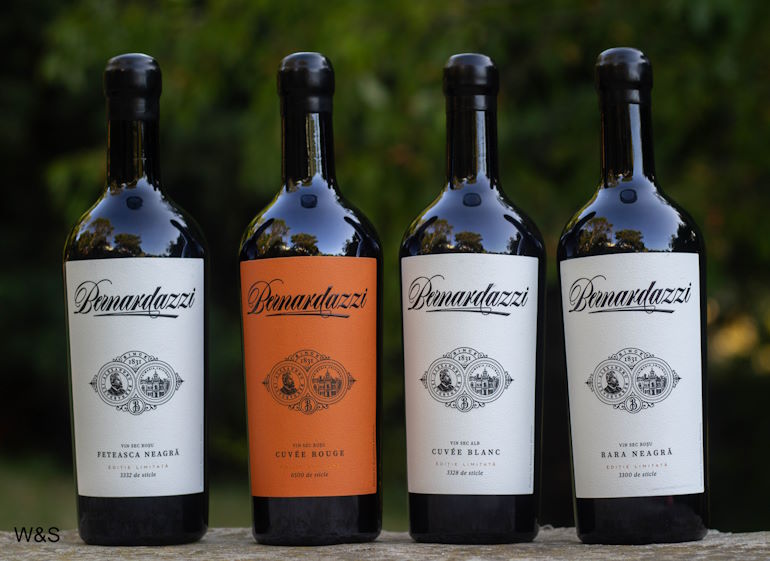
The three still red wines were conceived with Bernardazzi’s Italian origins in mind, in the style of the Italian wine Amarone. Fortunately, Novak Winery’s vineyards in the south of Moldova make this possible. However, the aim was not to make the wines resemble their famous counterparts, so local indigenous varieties were used instead. The result is very interesting wines, because they retain a distinctly Moldovan identity.
These wines were not created for everyday drinking. They were created so that you can reflect while enjoying the wine’s bouquet in your glass, savour every sip, and ‘talk’ to the wine. And also with those who share this pleasure with you,” says winemaker Andrei Novak.
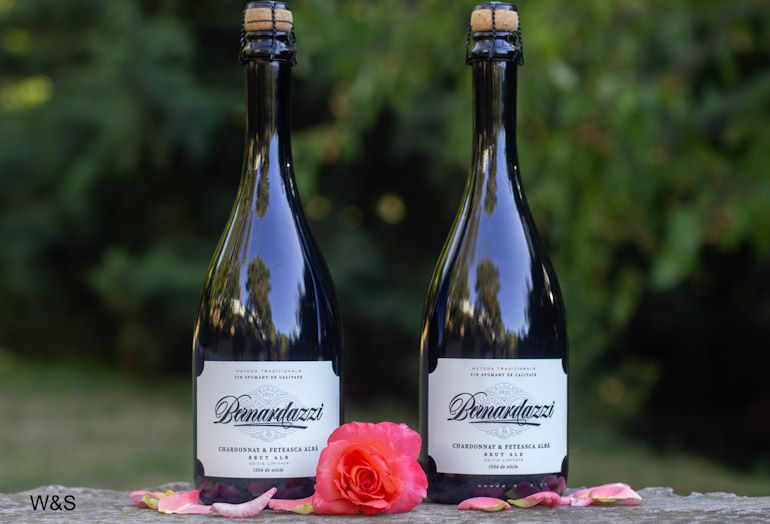
Chardonnay & Feteasca Albă Brut, aged 36 months
As the name suggests, the blend combines Chardonnay, a classic grape variety for sparkling wines, with the indigenous Feteasca Albă. A complex technology was used to make this wine (the method remains a secret), followed by 36 months of bottle ageing. Because the first stage of the process carried technological risks, Andrei Novak decided not to repeat the experiment. We therefore have a unique opportunity to enjoy Chardonnay & Feteasca Albă Brut while it is still available. The batch is extremely limited: just 1,504 bottles.
The wine is pale yellow, with a sheen.
When poured into a flute, it produces a tall crown of foam, and its tiny bubbles dance beautifully for a long time.
Bouquet: I have never encountered the aroma of (yellow) kumquat in any Moldovan sparkling wine, yet here it takes the lead. It is accompanied by notes of toasted rye-bread crust, flowers, anise and apple.
In a wine glass, the aromas include kumquat, jasmine, lemon, anise, toasted fresh rye-bread crust, cinnamon, green apple, honeysuckle, wildflowers and meadow herbs.
On the palate, there are hints of kumquat, rye crust, green apple and almond, along with a touch of minerality. The long, expressive finish brings notes of orange zest, rye-bread crust and almond. There is the harmony: many of the bouquet’s notes recur on the palate and in the finish.
Alcohol: 12.5%; sugar: 5.5 g/L, which makes it practically an Extra Brut.
A beautiful wine, unlike anything else, with a character all its own. If I were to imagine it as a person, I would see a beautiful young woman from the 19th century, wearing a white ball gown with a décolletage and a wide-brimmed white hat adorned with an ostrich feather.
Chardonnay & Feteasca Albă Brut, aged 47 months
The same composition, proportions and technology, but with a longer ageing period of 47 months, because we are on the 47th parallel. That is the associative parallel, so to speak. The batch also numbers 1,504 bottles.
The colour is just a little deeper than that of the previous wine.
In the flute, the mousse was slightly lower, but still quite good. The bead is beautiful.
The bouquet differs somewhat from that of its younger sibling. Kumquat is still the leading aroma, and the floral notes have disappeared, but the scent of toasted rye-bread crust remains. Fruitiness is now more of an overall impression than a distinct apple aroma. Notes associated with further development on the lees have appeared: almond and milk caramel.
In a wine glass, the expected aromas of kumquat and rye crust are joined by hints of milk caramel, anise, sweet pastry, almond, walnut, dried apple, canned apricot, a vanilla pod and dried flowers.
On the palate, there are hints of kumquat, rye crust and almond. The long finish carries notes of lemon zest and rye-bread crust. Alcohol: 12.5%; sugar: 5.5 g/L.
Overall, the wine feels more mature than the first one, but it shows no signs of oxidation. If I were to associate it with a person, I would see the older sister of the beauty I described above. She wears an outfit in the same style, only in champagne colours.
In future, these two sparkling wines will be replaced by wines made from a different blend. To be honest, though, I am sorry that Chardonnay & Feteasca Albă Brut will be a one-off release.
Cuvee Blanc
The blend combines Chardonnay and Alb de Onițcani, more precisely, two vintages of Chardonnay and two vintages of Alb de Onițcani. Each was vinified differently. The process included further fermentation, followed by ageing on fine lees in new 500-litre barrels made from Romanian and French oak. The “sur lie” ageing lasted from six to 12 months. The result is interesting.
The wine is pale yellow, with a sheen. The first impression on the nose is intensely fruity, with spices. Cuvee Blanc needs time to breathe, so I set my glass aside and returned to it an hour later. For you, I recommend decanting the wine into a decanter or jug and putting it in the refrigerator for that time so that it does not warm up.
After aeration, the bouquet revealed jasmine blossom, peach, vanilla, meadow herbs and wildflowers, orange zest, summer apple, pineapple, nectarine and hazelnut. A little later, the herbal aromas grew stronger.
The wine has a delicate texture. The palate is slightly buttery, with hints of orange zest, nectarine and peach stone, as well as jasmine and herbs. The expressive finish offers notes of orange zest, nectarine and vanilla.
Alcohol: 13%.
Cuvee Blanc is just as vivid on the second day. The wine has been made carefully, with no heaviness from the oak. You could lay it down in your collection for a year or two, if you have a cellar or wine cabinet, simply out of curiosity to see how it develops. As it stands today, it is complete and needs no further maturation.
A total of 3,328 bottles were produced.
Rara Neagră
For the Bernardazzi reds, the grapes were deliberately dried on the vine, rather than left hanging because the harvest had been delayed. The yield from the dried grapes was only 1.8 tonnes per hectare. Rara Neagră also brings together two vintages, 2021 and 2022.
Malolactic fermentation took place during fermentation. The wine was aged for 12 months in used French-oak barriques. Rara Neagră is not typical of its variety. It comes across as a well-trained athlete rather than a pale Turgenev heroine.
The colour is a fairly intense ruby for this variety. The first impression on the nose is berry-like.
Rara Neagră also needs about an hour of aeration in a decanter or jug. I, however, study the wine as soon as it is poured into the glass.
In my glass, aromas of chokeberry and black mulberry emerge, with a hint of vanilla pod. After 30 minutes, notes of blackberry and coffee appear, along with redcurrants on their stems. One hour and 15 minutes after pouring (I am deliberately waiting so that I can advise you to decant the wine), violet, white pepper, cinnamon and wild raspberry unfold. After three hours, the violet and blackberry aromas become very vivid, so do not be lazy about aerating this wine.
The wine has a delicate texture. The palate is very soft, with refreshing acidity and hints of chokeberry, dark chocolate and wild cherry. The long finish carries notes of dark chocolate and wild cherry. The alcohol is not noticeable despite its high level of 15%, with residual sugar at 6 g/L.
A total of 3,300 bottles were produced.
Feteasca Neagră, 2022
The same winemaking techniques were used for this wine as for Rara Neagră. Feteasca Neagră therefore belongs to the same “sports team” as Rara Neagră.
Its beautiful, deep ruby colour is a pleasure to behold. The first impression on the nose is of black berries. This wine, too, is asking for an hour in a decanter or jug to breathe.
The bouquet offers aromas of chokeberry, dried black wild cherry, conifer needles, black peppercorn, nutmeg, cherry, prune, raspberry fruit leather and tobacco leaf. In my glass, they emerged gradually over the course of an hour. It is therefore better to decant the wine straight away.
The texture is silky. On the palate, there are hints of black wild cherry, cherry and dark chocolate. The tannins are young (do not confuse them with “green” tannins), which means the wine will become more interesting if it spends a couple of years in the cellar. The long finish repeats the same notes found on the palate, blurring the line between these two stages.
Alcohol: 16%; residual sugar: 5 g/L. Everything is balanced.
A total of 3,332 bottles were produced.
Cuvee Rouge
The blend brings together Rara Neagră, Feteasca Neagră and Copceac grapes from the 2021–2022 vintages. The presence of the last variety makes this wine especially interesting and memorable. Copceac contributes notes that are entirely absent from other wines on our market and makes the wine a little lighter, although it is still powerful.
The winemaking method for Cuvee Rouge is similar to that used for the preceding red wines. Each variety was aged separately for 10 to 14 months in used barriques with different levels of toast.
The wine is dark ruby in colour. The first impression on the nose is of black berries, but not the same kind as in the previous red wines. A wealth of forest berries appears.
The bouquet opens with aromas of blackberry, black wild cherry, cherry, blackcurrant mashed with sugar, conifer needles and chokeberry, together with the sweetness of ripe black berries. Everything is lightly “dusted” with black peppercorn, cinnamon and nutmeg. After 30 minutes, violet and forest-berry aromas emerge; I find it difficult to identify the particular berries, which are a gift from Copceac.
The palate is very pleasant and soft, with a multitude of berry nuances, as though you had tossed a whole handful of berries into your mouth at once. Black cherry, cherry and blackberry can be discerned among them. The finish is long, with the same berry notes. The 15% alcohol is very well integrated. Residual sugar is 4 g/L.
A wonderful wine, unlike any other.
A total of 6,500 bottles were produced.
Cuvee Rouge can also be kept in a collection. According to Andrei Novak, the Bernardazzi red wines have a potential ageing life of 15–20 years; “they will develop incredibly well.” But is it worth keeping them for so long when they are ready to give you pleasure today? In my view, they should be drunk while they are still fruit-driven. Long-term ageing makes sense if you have a large supply of these wines and can afford to enjoy it gradually. If you have just one bottle of Bernardazzi red, there is little point in keeping it for 10–15 years.
Where can you buy them?
At the distributor’s online store, vincuvin.shop, in wine shops and several restaurants in Chișinău, as well as at the Duty Free shop in Chișinău International Airport.
Since the wines have been released in very limited quantities, export is not planned. However, you can buy them at the airport before departure and take them with you.
How much do they cost?
Chardonnay & Feteasca Albă Brut, aged 36 months: 400 lei at vincuvin.shop (the prices below are from the same source).
Chardonnay & Feteasca Albă Brut, aged 47 months: 400 lei.
Cuvee Blanc: 420 lei.
Bernardazzi red wines: 550 lei.
P.S.: In my view, the Bernardazzi wines are a worthy tribute to the great architect.
