

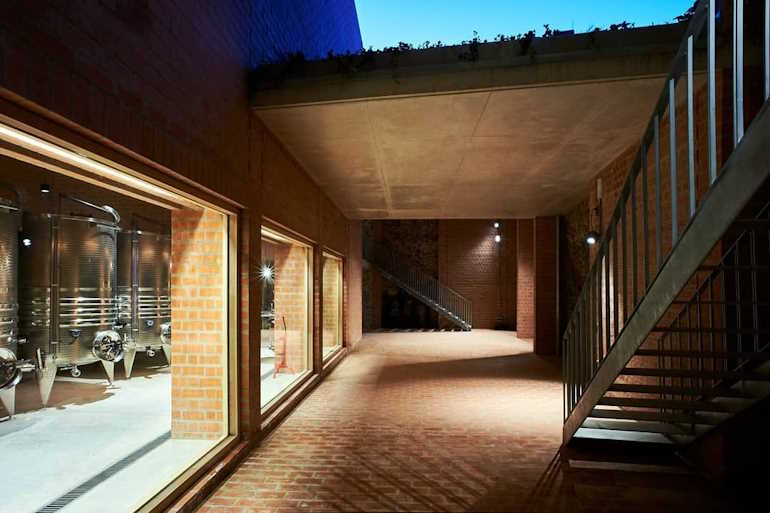
When planning my trip to Priorat, I wanted not only to see the pioneers of the region’s revival, but also to discover the new wave of wineries that had emerged, inspired by the success of the “first five”. “Clos Pachem” is one of them. On the one hand, it stands out for its different vision of winemaking in Priorat; on the other, its very name signals its adherence to the fundamental principles established by the pioneers. The word “Clos” expresses a commitment to terroir, the very source of the uniqueness of Priorat wines. And “Clos Pachem” lives up to that principle.
It All Began with Passion
When writing about Priorat, I mentioned that many people had wanted to make wine there, but not everyone could withstand its challenging conditions, and some eventually abandoned their plans. “Clos Pachem” was founded by Michel Grupper, who first visited Priorat more than ten years ago. He was captivated by the landscapes and the people of this wine region, and fell in love with Priorat. “Clos Pachem” was the result of that love.
Michel Grupper was born in France. His mother is Swiss, while his father is French and had a great love of wine, a passion he passed on to his son. Although Michel trained as a surgeon (he now heads a medical foundation that helps children in developing countries), for over 20 years he has participated in different wine fair associations, and as a founding member of an “urban cellar” (“Les Vignerons Parisiens”).
To establish his winery, he chose the very “heart” of Priorat: the village of Gratallops, from where the region’s revival began in the 1980s. The second word in the estate’s name, “Pachem”, is an acronym formed from the names of his children: PAul, CHarles and EMma, emphasising just how close this project is to his heart.
While developing the concept for his new project, Michel Grupper decided to focus on the history of Priorat and the philosophy of sustainable agriculture. That is why the construction of the boutique- winery “Clos Pachem” from scratch, on a plot of land adjoining a 16th-century Catholic church, had to take the historic architecture of Gratallops into account and blend harmoniously into its surroundings. In fact, the winery deserves a closer look for its architectural features alone.
A Winery Full of Secrets
The project was designed by the renowned Spanish architectural firm “H Arquitectes”. The architects’ task was to ensure that the winery building itself would contribute to the winemaking process based on biodynamic methods, while also making the structure as efficient as possible.
It was built between 2017 and 2019 on an unusually shaped, L-shaped plot surrounded by the typical urban fabric of the historic center, with its narrow streets and terraced houses. The church was the only exception. Part of the plot’s boundary was marked by an old, irregularly shaped stone wall, reaching approximately 10 metres in height at its highest points. This wall became the starting point for the project. The architects found an ingenious way to combine the old masonry with modern materials.
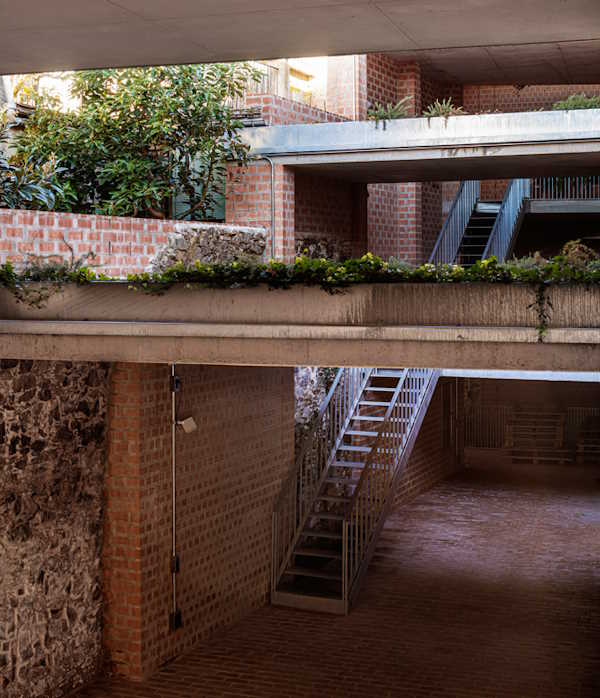
Taking the geometry of the plot into account, they created two separate zones. The first is a large, regular volume, or nave, which houses the production facilities. The remaining Z-shaped space forms a passageway running alongside the ancient stone wall. It provides ample room for grape processing and, once the winemaking season is over, can be used to welcome visitors and host events. For example, shortly before my visit, a classical piano concert had taken place here, attended by a hundred people. The acoustics are excellent.
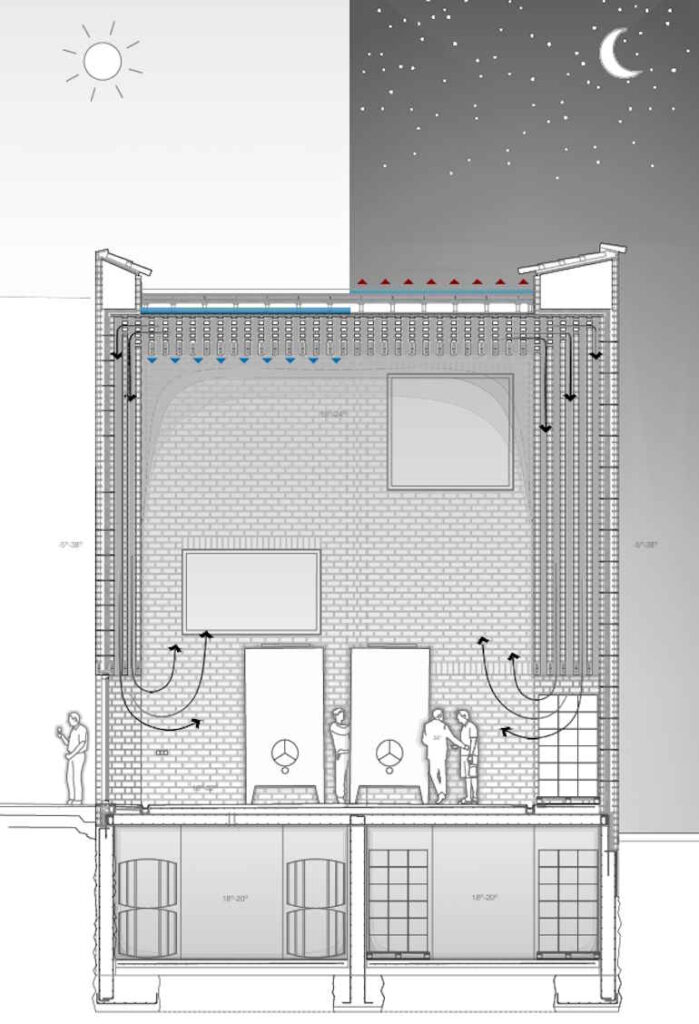
The winery’s exterior wall, behind which the fermentation area is located, is up to 1.75 metres thick. It consists of an entire system of load-bearing brick walls built between columns, forming a series of chambers that facilitate air circulation and the natural cooling of the building. The outer wall comprises seven “layers”, while the inner wall has four. However, these layers do not extend all the way down to the floor. Beneath five layers of brickwork, niches have been created to house the winemaking equipment. Cool air flows down through the spaces between these layers.
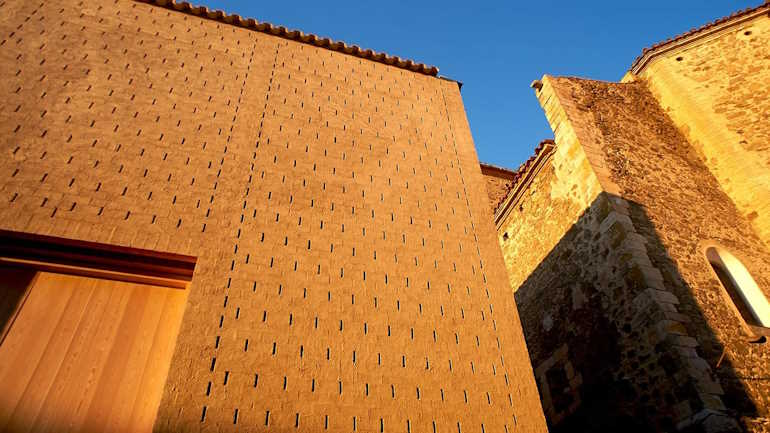
In certain sections of the facade, the vertical joints between the bricks have deliberately been left without mortar. This allows air to circulate and ventilates the air cavity between the two layers of the facade structure.
The fermentation room, where the tanks are installed, is three storeys high. This is because the extra height allows warm air to stratify in the upper part of the room, well away from the wine tanks. The cellar used for ageing the wines is located beneath the fermentation area, below ground level.
At the center of the building’s roof is a two-level cooling pool filled with water. Depending on the time of day, the water moves from one level to the other. At night, it remains at the upper level, releasing the heat it has accumulated into the night sky. In the morning, the water flows down to the lower level, which is in contact with the ceiling slab, cooling the interior spaces. In this way, a large-scale heat-exchange mechanism is created between the winery’s interior and an “infinite heat reservoir”, namely outer space. Thanks to this system, the winery does not use artificial cooling for its production areas.
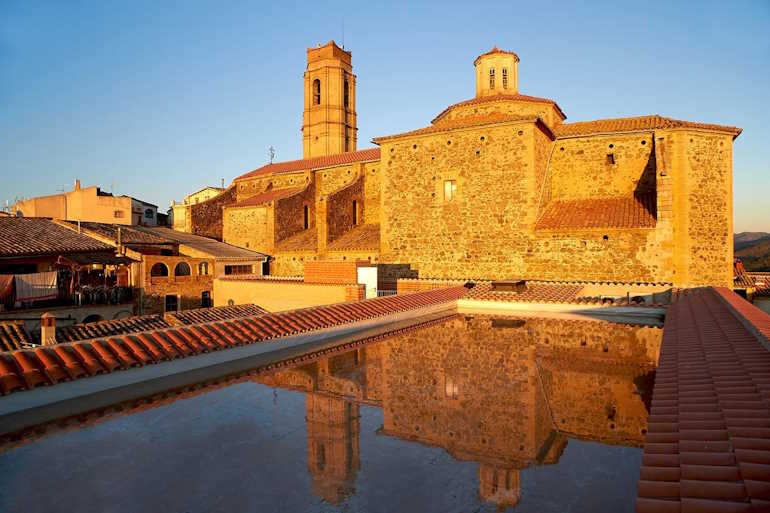
And above the Z-space, an entire system of roof terraces has been constructed at varying heights. They are planted with greenery. As rainwater accumulates, it gradually flows from one level to the next, watering the plants and cooling the surrounding environment. In addition to protecting the space from precipitation, the terraces provide shade, shielding it from direct sunlight and creating a cool, garden-like atmosphere. This is an ideal setting for an open-air bar and shop, where visitors can buy wine, taste it or enjoy a bite to eat.
From the outside, the building looks relatively traditional. But once inside, it is impossible not to be impressed by how intelligently it has been designed. The architects behind the “Clos Pachem” project have received numerous awards, including the “International Prize for Sustainable Architecture Fassa Bortolo` 2023”. The winery also attracts architects who come to see the project for themselves and, while they are there, taste the wines.
The Vineyards
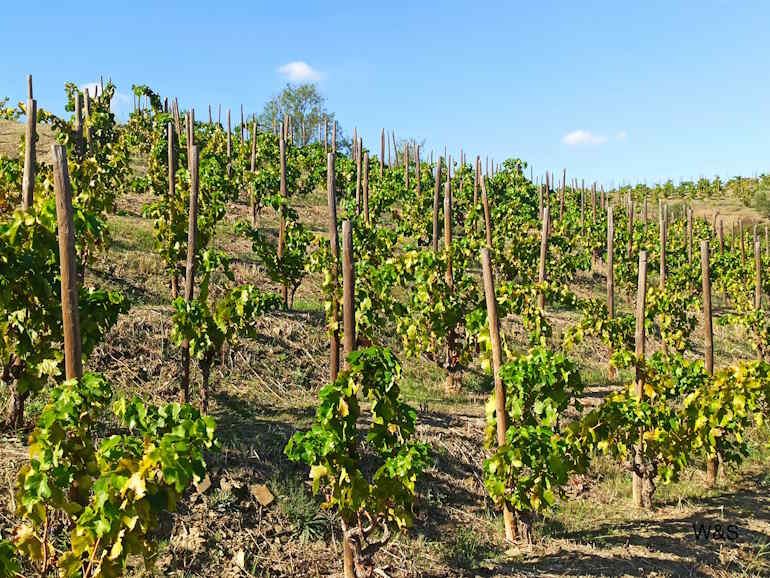
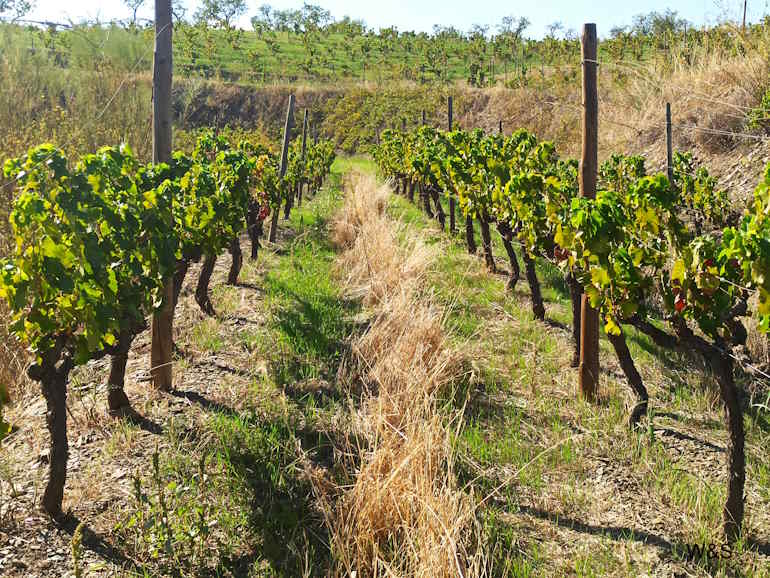
“Clos Pachem” owns just six hectares of vineyards. The larger part, five hectares, is located at the Planassos estate, within the municipality of Gratallops, in the very heart of the Priorat wine region (DOQ Priorat). Planassos forms a natural amphitheatre. The vines are planted on slopes with different aspects and at varying altitudes, resulting in microclimatic variations that influence the development of Garnacha and Cariñena in different ways. The soils are the characteristic slate formations of the region, known as llicorella.
One hectare of the Mas de Serres vineyard, planted with Cariñena, occupies a unique location between the municipalities of Gratallops and La Vilella Baixa, in the heart of Priorat.
The vineyard is planted on a steep, north-east-facing slope. Carinyena does not occupy the entire area but grows alongside other grape varieties and trees, including almond, olive and walnut trees. The soils are predominantly slate, with some sandstone.
The vines vary in age, ranging from young plantings to very old ones, between 70 and 80 years old, and even 100–120 years old in the case of Carinyena. The vineyards are cultivated using biodynamic and organic methods. The grapes are harvested by hand and placed in small 12-kilogram crates.
We harvest approximately two kilograms of grapes from young vines. From century-old vines, we sometimes get only 100 g per plant. If producing a bottle of an ordinary young wine requires the harvest from a single vine, then for our top wine we need grapes from six vines to make just one bottle. But in the latter case, the grapes are extremely concentrated,” explained Luis Willaert, the wine tourism and events coordinator who accompanied me during my visit.
Since its own grape supply is insufficient, “Clos Pachem” works with a winery in Gandesa, in the Terra Alta region (DO Terra Alta), in southern Catalonia, which is particularly renowned for its white wines. The winery purchases Garnacha Blanca (Grenache Blanc) grapes there. The terroir of Terra Alta differs from that of Priorat. Its soils contain a high proportion of limestone, while the particular vineyard in Gandesa has clay-limestone soils. The climate in Terra Alta is considerably harsher and more continental than in Priorat, with cold winters, lower rainfall and very high wind activity.
The winery also sources approximately 50% of the Garnacha and Carinyena grapes used to produce “Pachem Garnatxa” and “Pachem Carinyena” from local growers.
On Winemaking
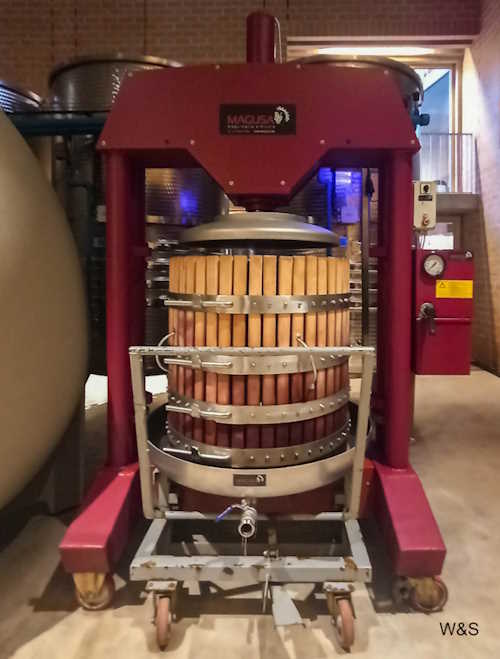
The grapes undergo their first selection in the vineyard during harvesting, followed by a second selection at the winery.
Despite the modern equipment, the winery does not use a pneumatic press to press the grapes. Instead, it relies exclusively on a hydraulic basket press.
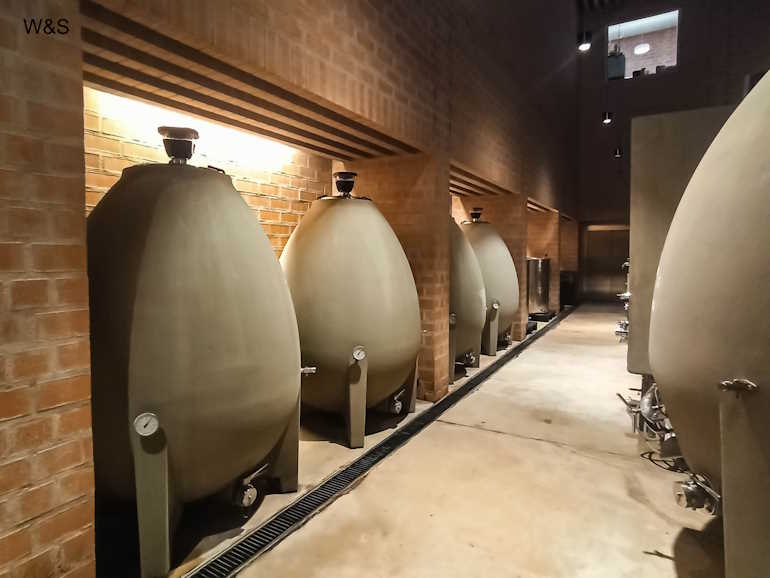
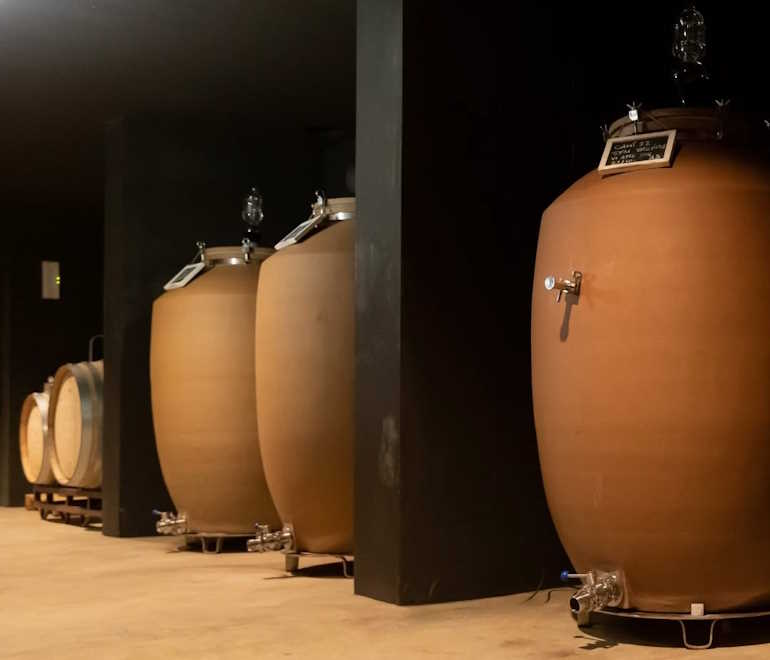
Fermentation takes place in stainless-steel tanks, while ageing is carried out in concrete “eggs” and tanks, as well as in clay amphorae and large oak barrels (foudres) with a capacity of 1,000 litres each. The winery has only two such barrels. Oak is used in the production of just one wine, as the team seeks to avoid the influence of wood on the wine, regarding oak barrels as part of the “old school”.
“When creating the winery, Michel Grupper wanted to make Priorat wines fresher, lighter and more fruit-driven,” says Luis Willaert. “That is why he decided to use concrete and clay vessels in the winemaking process. We also do not use commercial yeasts, only natural ones. Fermentation occurs spontaneously. We strive to express the terroir of Priorat and the character of its traditional grape varieties in our wines, adhering to the principle of minimal intervention. Our wines have low sulphite levels.”
Despite being a small winery, “Clos Pachem” has its own bottling line.
In 2025, the winery produced 30,000 bottles across all its wine ranges, half of which was the young Garnacha wine. Of the total production, 60% is exported. The main export markets are Switzerland, the United Kingdom and Holland.
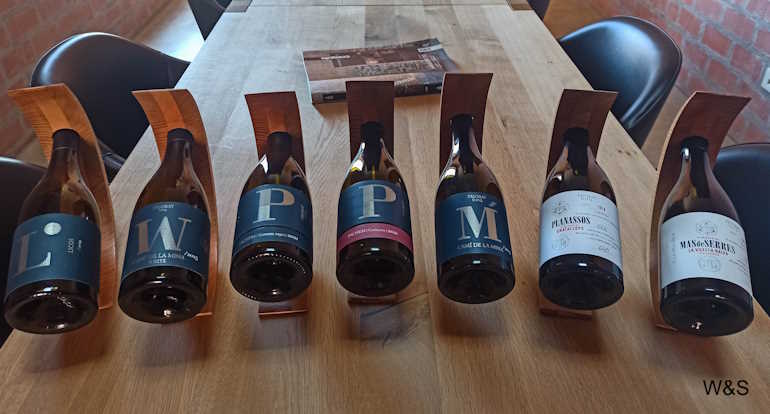
P.S. The wines themselves are the subject of a separate article.
Related articles:
DOQ Priorat: From Abandoned Vineyards to Iconic Wines
“Clos Mogador”: The “Adventure” That Changed the History of Priorat
P.S.: If you enjoy the wine-and-spirits.md website, you can help support its work financially via patreon or PayPal (angeltar387@gmail.com).
