

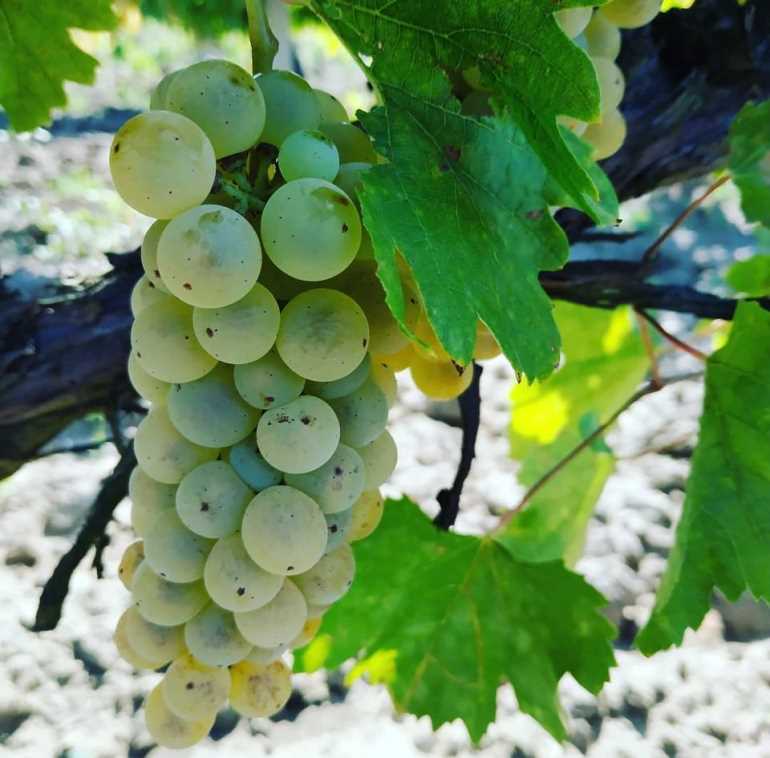
For a long time, the regional white grape variety Feteasca Albă was believed to be of Hungarian origin, although it has been cultivated in Moldova for centuries. Among its synonyms (Păsăreasca, Poama Fetei, Văratic, Medhentraube) there is also the Hungarian name Leányka, which likewise translates as “maiden” (referring to the grape, or “maiden wine” in the case of wine). The shared name and ampelographic characteristics created the impression that these were one and the same variety. However, a recent DNA study conducted at the University of California, Davis, has challenged this assumption.
When Was It Registered in Moldova?
Feteasca Albă was officially registered in the Republic of Moldova in the Plant Catalogue in 1946, where Hungary was indicated as the country of origin. Today, the maintenance of the variety in Moldova is overseen by the Research and Practical Institute of Horticulture, Viticulture and Food Technologies.
In 1965, when the Moldavian SSR was part of the Soviet Union, the Institute of Plant Industry in Leningrad transferred samples of Feteasca Albă, collected in Moldova, to the University of California, Davis, under the name “Fetyaska.” In 1968, the variety was planted in the institute’s vineyard (a two-year quarantine period is required there).
In February 2021, it was reported that Feteasca Albă and Leányka do not share the same DNA profile. This means that Feteasca Albă is not of Hungarian origin – a finding that can be described as a true sensation. However, the parentage of the variety remains unknown.
Historical and Current Cultivation
Feteasca Albă has not only gained popularity in recent years. During the Soviet period, it was planted extensively. For example, in 1977, vineyards of this variety covered more than 31,000 hectares, or approximately 13% of all vineyard plantations.
As of June 2021, the Vine and Wine Register of Moldova listed 1,647 vineyard plots of Feteasca Albă with a total area of 698 ha (the registry is still being completed). Nevertheless, it can be said that Feteasca Albă is no longer among the top five white grape varieties cultivated in the country.
Ampelographic and Agronomic Characteristics
Feteasca Albă is an early-to-mid ripening variety (the growing season in Moldova lasts 123–125 days, with a sum of active temperatures of 2500–2600°C). It is characterised by moderate sugar accumulation and a rapid decline in acidity, which is why harvesting typically begins in late August to early September.
The bunches are medium-sized, cylindrical or cylindro-conical, often winged, and of medium density. The berries are round, small to medium-sized, light green with a slight sun blush, featuring thin skins and juicy pulp.
The variety is relatively productive, with a potential yield of 12–14 t/ha; in Moldova, yields typically range from 7 to 12 t/ha. At a sugar content of 180–190 g/dm³, titratable acidity is around 7–8 g/dm³.
According to observations by Moldovan researchers, Feteasca Albă has moderate frost resistance (down to –22°C). With proper vine maturation and tissue differentiation, winter hardiness can increase by 1–2°C. Like other European varieties, it requires standard plant protection measures and is not particularly drought-resistant. It responds well to fertile, well-aerated soils.
Recommended rootstocks include R × R 101-14, B × R Kober 5BB, and B × R SO4. The vine is typically grown as a non-covering, trunk-trained system.
Wine Styles and Production
Today, Feteasca Albă is primarily used to produce fresh, still wines without oak ageing, as well as sparkling wines. During the Soviet period, it was also used for quality aged wines, matured in large oak casks for approximately one and a half years (compared to two years for most other white varieties). Lees ageing for one and a half to two months was also practiced.
At that time, wines labelled “Feteasca” could be made either from 100% Feteasca Albă or from blends of Feteasca Albă and Feteasca Regală. In some regions, the two varieties were even planted together within the same vineyards.
This combination was largely forgotten after independence. Today, however, a blend of the two is produced by Casa Vinicolă Luca under the name Femme Fatale, an idea reportedly suggested by British expert Robert Joseph.
Scientific Work on the Variety
“In 2020, we planted this variety in a ‘pre-basic’ mother block, meaning it is currently own-rooted material propagated in vitro,” explains Dr. Victor Bondarchuk, Head of the Laboratory of Virology and Phytosanitary Control at the Research and Practical Institute of Horticulture, Viticulture and Food Technologies. “This autumn, we will already collect canes to produce grafted planting material and establish a ‘basic’ mother plantation in 2022. This means that nurseries will be able to obtain propagation material from us in 2023. To propagate Feteasca Albă, we identified plantings from the Soviet period (1980s).”
How do scientists work in such cases? First, they visually select vines that meet the ampelographic characteristics of the variety and evaluate yield. Then they analyse grape quality parameters such as sugar content and acidity. Small batches of wine are produced in microvinification facilities to assess grape quality.
From there, five to seven vines are selected and tested for diseases, with all infected plants eliminated. Ultimately, a single healthy vine remains – free from bacterial cancer, viral, and phytoplasma diseases. This vine is introduced into in vitro culture and propagated to obtain sufficient material to establish one or two rows in a pre-basic mother block.
Own-rooted plants are planted in this pre-basic block. Typically, in the second year, canes are taken, grafted, and planted in a grafted “basic” mother block. From there, nurseries will source propagation material for commercial vineyard establishment.
Feteasca Albă wines can be explored further through dedicated tastings and producer portfolios.
Related articles:
Feteasca Albă Wines in Moldova
