


Château Margaux is one of the most famous châteaux in the world and one of the great wines of France. Need I say how excited I was as I walked along the most famous plane-tree avenue towards the château, which I had seen so many times in photographs and videos? Now its doors had been opened to me, giving me the opportunity to discover how the legendary Château Margaux wine is made.
The history of the château
This place was known as far back as the 12th century as “La Mothe de Margaux” (“The Hill of Margaux”), although there were no vineyards here at the time. During the English conquest of Aquitaine (1152–1453), Bordeaux wines found a new market in the British Isles, giving a boost to the development of viticulture in the region. The estate itself remained in the hands of various lords for a long time.
The Lestonnac family played a decisive role in its development. Pierre de Lestonnac acquired the estate from his cousin and, between 1572 and 1582, expanded it, built a new château and increased the area under vines. By the end of the 17th century, Château Margaux covered 265 hectares, the same area as today. Since then, one-third of the estate has been devoted to vineyards.
At the beginning of the 18th century, the quality of Médoc wines began to improve, largely thanks to a Château Margaux estate manager named Berlon. His ideas were revolutionary for their time. In particular, he was the first to introduce separate processing of red and white grape varieties, which had previously been planted together. He also insisted that grapes covered in dew should not be harvested, as the moisture would dilute the wine. Berlon recognised the influence of soil, which varied from one plot to another within the estate, on the character of the future wine.
Joseph de Fumel, who owned the estate in the mid-18th century, had already begun planting selected grape varieties on the best plots in order to produce high-quality wines.
In 1771, wine produced at Château Margaux became the first claret to be sold at a Christie’s auction. At the time, the estate belonged to Count Élie du Barry. Thomas Jefferson, the United States Ambassador to France, ordered the 1784 Margaux vintage, writing: “There cannot be a better bottle of Bordeaux.” In 1787, long before the official classification of 1855 was introduced, Jefferson also noted that Château Margaux was one of Bordeaux’s four finest vineyards.
The 18th century is considered Bordeaux’s golden age. However, the course of events was interrupted by the French Revolution. In 1793, Count Élie du Barry (Count of d’Hargicourt, Lord of Margaux) was executed by guillotine, and his property was confiscated by the revolutionaries and sold at auction.
The estate was acquired by a citizen named Miqueau, under whose ownership it fell into decline. Laure de Fumel, the last descendant of the Lestonnac family, tried to save it by buying the estate back from Miqueau. However, she was forced to put it up for auction in 1801.
The new château
The new owner of Château Margaux was Bertrand Douat, Marquis de La Colonilla. He decided that the château did not live up to the reputation of the Château Margaux vineyard, ordered it to be demolished and commissioned a new building, which has survived to this day.
The château, together with all the estate’s outbuildings, was designed as a single neo-Palladian complex by Louis Combes, a renowned architect from Bordeaux. Some of the buildings were intended to accommodate the estate workers. Construction began in 1810 and was completed in 1815. However, the Marquis de la Colonilla died in 1816 without ever having lived in his new château, which is often referred to as the “Versailles of the Médoc”.
The 1855 Classification
The world’s most famous wine classification came about thanks to Emperor Napoleon III. In preparation for the second World’s Fair in Paris in 1855, he asked each wine-producing region to draw up its own classification. The Bordeaux Chamber of Commerce and Industry initiated the process for the Gironde department.
The criteria were the reputation of the wines and the prices they commanded in commercial transactions. The classification included only red wines from the Médoc, sweet white wines from Sauternes and Barsac, and one red cru from Graves. All these regions are located on the left bank of the Garonne and Gironde rivers.
For red wines, 60 crus from the Médoc and one cru from Pessac-Léognan (Château Haut-Brion) were ranked in five categories:
– Five Premier Grand Cru Classé (First Growths).
– 14 Deuxième Grand Cru Classé (Second Growths).
– 14 Troisième Grand Cru Classé (Third Growths).
– 10 Quatrième Grand Cru Classé (Fourth Growths).
– 18 Cinquième Grand Cru Classé (Fifth Growths).
For sweet white wines, 27 crus from the Sauternes and Barsac appellations were classified as follows: one Premier Cru Supérieur, 11 Premier Cru and 15 Deuxième Cru.
In 1973, Château Mouton Rothschild was promoted from Deuxième Grand Cru Classé to Premier Grand Cru Classé (Médoc).
Of the original four vineyards classified as Premier Grand Cru Classé, only Château Margaux received the maximum score of 20 out of 20. As early as the beginning of the 18th century, the château’s wines were being sold on the London market as “New French Clarets” at three times the price of traditional clarets.
This classification remains relevant to this day.
Phylloxera
In 1879, Château Margaux was sold once again. It was purchased by Count Pillet-Will. He witnessed the destruction of the famous vineyards by phylloxera. The only way to defeat the pest was to graft French vines onto American hybrid rootstocks. The château’s vineyards were replanted.
The 1893 harvest was abundant. However, the young vines were unable to produce grapes of the required quality, and some of the wine had to be sold as a “second wine”. In 1908, it was given the name “Pavillon Rouge du Château Margaux”.
Pierre Moreau had been managing the estate since 1896. In 1924, he introduced a crucial innovation: wine would henceforth be bottled exclusively at the château. This became a guarantee of authenticity for buyers.
Château Margaux, like the Eiffel Tower
In 1925, Fernand Ginestet, a Bordeaux wine merchant who owned a neighbouring château, acquired a majority stake in Château Margaux. His son Pierre gained full control of the estate in 1949. The family invested considerable effort in reorganizing the vineyards. However, in 1965, Pierre Ginestet introduced a new policy: the vintage year would be indicated only for outstanding vintages, while all other wines would be sold without a vintage designation, following the example of Champagne.
The economic crisis in Bordeaux in the 1970s affected sales. After three consecutive vintages, 1972–1974, remained unsold, Ginestet was forced to put Château Margaux up for sale.
The American company “National Distillers & Chemical Corporation” wanted to acquire the estate. However, French President Valéry Giscard d’Estaing blocked the deal because the château was considered a national treasure. In 1946, the building had been declared a historic monument. The proposed sale of Château Margaux was compared at the time to selling the Eiffel Tower.
The Mentzelopoulos family
Two years later, in 1977, the estate was acquired by André Mentzelopoulos, a Greek-born entrepreneur married to a Frenchwoman, through his company “Félix Potin”. It was a period of recession, when investors showed little interest and owners of Bordeaux châteaux lacked the funds to develop their properties.
André Mentzelopoulos began the transformation with the vineyards. Vines more than 30 years old were replaced, and a drainage system was installed. Wines that did not meet the required standards were declassified, and the quality of the white wine was improved. The new owner planned to build the first large underground cellar in the Médoc and introduced ageing in new barrels. He also invited the renowned oenologist Émile Peynaud to act as a consultant. Under his guidance, Mentzelopoulos revamped the second wine, “Pavillon Rouge du Château Margaux”, and the estate’s only white wine, “Pavillon Blanc du Château Margaux”.
The château was restored under the supervision of inspectors from the French Historic Monuments Authority. Its interiors were redesigned by the outstanding historical interior designer Henri Samuel, who recreated the atmosphere of the First Empire. In other words, André Mentzelopoulos revived both the architectural and winemaking heritage of Château Margaux.
The first results of his work came when the 1978 vintage was recognized as exceptional. Sadly, he died in 1980 at the age of 60. At the estate, they believe that no other owner has played such an important role in its history over such a short period of time, despite Château Margaux’s centuries-old past.
His daughter Corinne Mentzelopoulos, who was only 27 at the time, continued her father’s work. She completed the restoration of the château and, in 1982, the construction of an underground wine cellar for the second year of ageing. Previously, underground storage facilities had not been built in the Médoc because the water table was so close to the surface.
In 1983, on Émile Peynaud’s recommendation, she hired Paul Pontallier, an agricultural engineer and oenologist with a doctorate. In 1990, he was appointed Managing Director. During his 33 years at the estate, until his death in 2016, Paul Pontallier played an important role in the production of exceptional wines.
In early 1990, Corinne Mentzelopoulos entered into a share exchange with the Agnelli family, retaining a 25% stake and control of the château’s business. In 2003, following the death of the head of the company, the Agnelli Group decided to sell its shares in Château Margaux. Ms Mentzelopoulos bought them back, becoming the estate’s sole owner.
The vineyards
Only a small area of vineyards lies in front of the château. Most of the vines are located behind the building, in the northern and western parts of the estate. In total, 82 hectares are planted with red grape varieties (75% Cabernet Sauvignon, 20% Merlot, with the remainder comprising Cabernet Franc and Petit Verdot, all belonging to the Margaux appellation), while 12 hectares are planted with Sauvignon Blanc, which belongs to the Bordeaux appellation.
One-third of the estate is covered by woodland, planted in the 19th century for practical purposes, including construction and heating. Another third consists of pastures where cows graze. Cattle were also introduced to the estate in the 19th century.
Initially, they were kept to provide food for the workers. Today, they are used to produce compost, which is applied to the vineyards as part of organic farming practices, although the château does not hold the relevant certification. The estate follows the principles of sustainability.
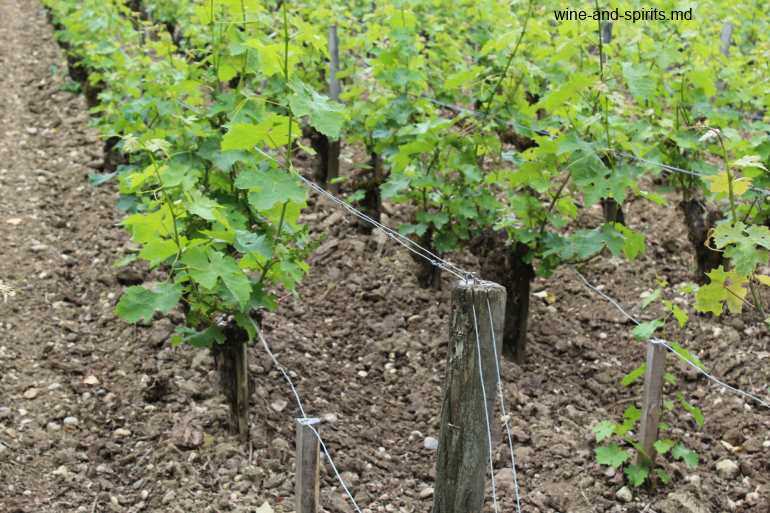
Both old and young vines grow in the same vineyard. Since great wines are made from grapes grown on vines that are at least 20 years old, the estate tries to keep its old vines in production for as long as possible. Therefore, whenever a vine dies, it is replaced with another one.
Every year, following winter pruning, between 10,000 and 15,000 new vines are planted in the gaps left by dead plants over a period of two months. This makes it possible to maintain a planting density of 10,000 vines per hectare. The lifespan of these replacement vines is limited, however, because eventually the entire plot must be uprooted. After that, the soil is left to rest for six years before a new vineyard is planted.
The soil surface contains plenty of gravel and river pebbles. These poor soils have little capacity to retain water. Deeper layers contain limestone, clay and marl.
The Gironde estuary is located just one kilometre from the château. The Margaux appellation lies on its left bank. The vineyards situated beyond the château are even closer to the river and benefit from its positive influence. This is precisely why most of the plantings are protected from frost.
Only the Sauvignon Blanc plot is sensitive to spring frosts, so a protection system was installed there in 1983. It sprays the vines for as long as frost persists, usually until dawn. The heat released as the water freezes helps maintain the temperature above the threshold at which vegetation is destroyed.
Back in the 1980s, Château Margaux reviewed its chemical vineyard protection methods in order to preserve the balance of spider and insect populations. After several years of work, the situation was stabilized. Since then, these populations have coexisted and regulated themselves without human intervention, or with organic methods alone.
Pheromone-based methods were developed in the late 1990s. Today, no insecticides are used in the château’s vineyards. Copper sulphate and Bordeaux mixture are applied to protect the vines against diseases. Herbicides, too, disappeared from the château’s vineyards long ago.
In 1986, Château Margaux became the first vineyard in the Médoc to begin removing a certain number of grape clusters before veraison, which takes place around the beginning of August. This encourages the remaining bunches to ripen without increasing the vigour of the vine. The method also makes it possible to select the best clusters and remove those that are poorly positioned on the vine or lag behind the others in their development.
The estate hires an additional 300 workers for the harvest, more than half of whom are local residents. Many foreigners and students also come to work during this period. The local workers are more experienced and valuable because grape sorting is particularly important during harvesting.
Main AOC Margaux requirements
The principal grape varieties are Cabernet Sauvignon, Cabernet Franc, Merlot, Carmenère, Côt (Malbec) and Petit Verdot. The minimum planting density is 7,000 vines per hectare. The distance between rows must not exceed 1.5 metres. The proportion of missing or dead vines must not exceed 20%.
Yield is a key factor in grape quality. To protect wine quality and the longevity of the vines, the Margaux appellation has established a limit that is the strictest in the Médoc. The average maximum crop load per plot is therefore set at 9.5 tonnes per hectare. In other words, the maximum number of clusters per vine is 14 for Petit Verdot and 12 for all other grape varieties. Expressed as wine volume, this corresponds to a yield of 57 hectolitres per hectare. The absolute limit is 63 hectolitres per hectare.
The use of herbicides is prohibited in the Margaux appellation. An amendment to the AOC Margaux specifications, published on 13 April 2023, stipulates that vegetation between all rows, whether sown or naturally occurring, must be controlled by mechanical or physical means.
Malolactic fermentation is a mandatory winemaking process. Wines must be aged until at least 1 June of the year following the harvest. Bottling may take place no earlier than 1 June of the year following the harvest and no later than 31 December of the third year after the harvest.
Once the ageing period has ended, the wines may be released to consumers from 1 September of the year following the harvest.
In the “temple” of winemaking
The château can only be viewed from behind its wrought-iron gates, as the grounds beyond are private property where the château owner’s family lives. Corinne Mentzelopoulos occasionally invites outsiders there for business meetings. Private events are not held on the premises.
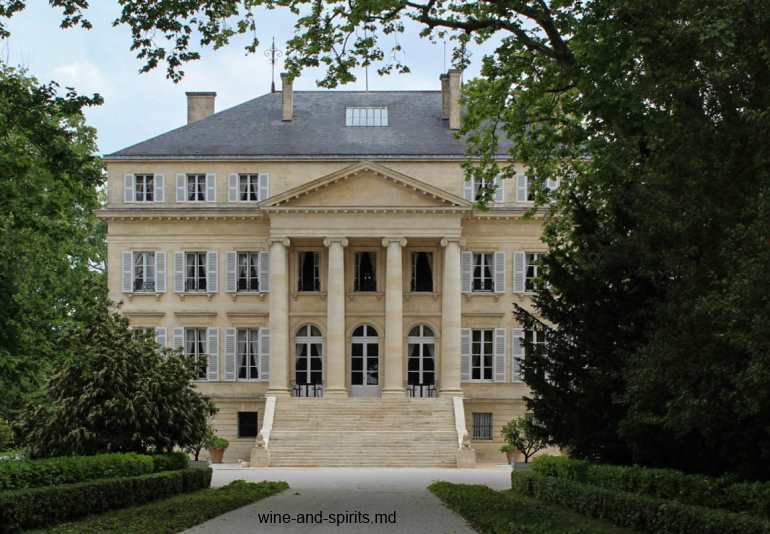
Today, the buildings that once housed the estate workers accommodate modern vineyard machinery and equipment used during the grape-processing season.
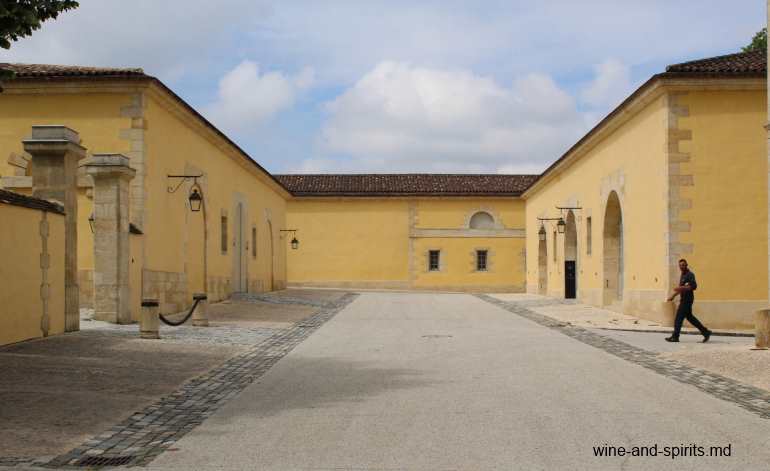
The historic winery facilities continue to serve their original purpose. They are located to the right of the château. However, the estate needed to expand its production facilities to accommodate a growing number of tanks for the separate processing of smaller batches of grapes. At the same time, Château Margaux was determined to remain faithful to its architectural heritage. The design of the new winery complex was therefore entrusted to the renowned British architect Lord Norman Foster.
Construction was completed in 2015, coinciding with the celebration of the 200th anniversary of Château Margaux’s architecture. The new facilities included a cellar, a research centre, an underground wine library and a visitor centre welcoming thousands of guests from all over the world.
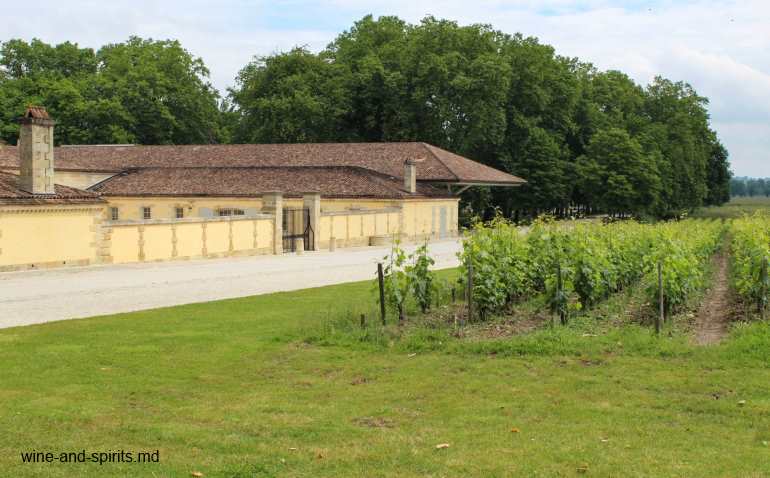
In the photograph, the new building is the one on the far right. It blends harmoniously into the ensemble of historic buildings dating from 1815. This was achieved by giving the modern building the same roof as the old winery. It is covered with antique roof tiles, yet remains a highly dynamic structure. Its roof rests on columns located on the outside. There are no supporting walls, and the side walls are made of glass. The structure can be modified very easily.
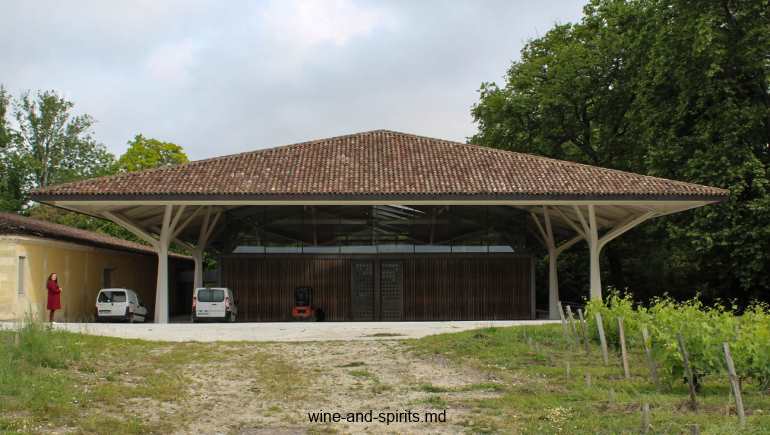
The architect achieved his objective: to unite history and modernity and demonstrate how the former continues into the present.
The new winery was built primarily for the production of white wine, “Pavillon Blanc du Château Margaux”. Some batches of red grapes from individual plots are also vinified here. The tanks have a capacity of approximately 70 hectolitres.
The grape selection process is extremely strict, as the aim is to produce wine of the highest possible quality. Only one-third of the Sauvignon Blanc harvest is therefore used to make “Pavillon Blanc du Château Margaux”. The rest is declassified and sold.
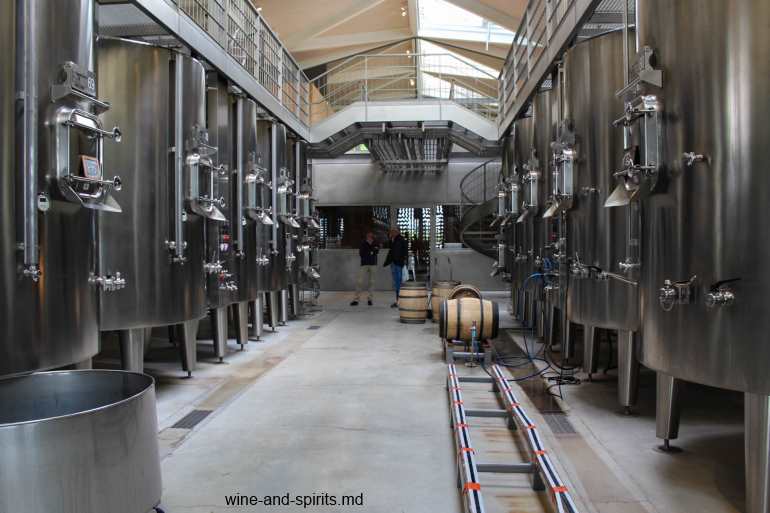
The white wines are also aged in barrels of different sizes for up to nine months. Only 25% new oak is used for Sauvignon Blanc. The barrels come from different producers, but they are made exclusively from French oak.
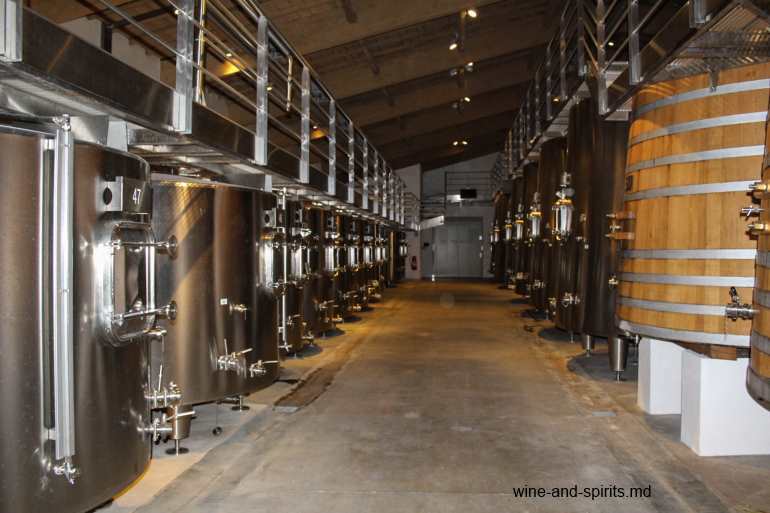
A passage from the new winery pavilion leads into the historic section. In the building constructed in 1815, red grape varieties are fermented in both stainless-steel and oak vats (with a capacity of 150 hectolitres), where temperature control is also maintained. The winemakers say that the results are better in oak, even though these vats are already 60 years old. Maceration on the skins lasts three weeks.
I should pause here to describe how the grapes are received at the winery. There is no permanent grape-processing facility for the initial stages. Red grapes arrive from the vineyards in crates at the historic winery courtyard, having already undergone preliminary sorting. They are tipped onto tables set up there, where their quality is checked and leaves and any unwanted berries are removed. The stems are then separated, but the berries are not crushed. Their skins are merely broken slightly.
I was interested to know which yeasts were used for fermentation. As it turned out, they are not indigenous yeasts. They are commercial strains because they are more reliable. However, the château has a team of scientists and engineers who study the vineyards and provide recommendations on their management, conduct vinification experiments and investigate how the vineyards can adapt to climate change. The researchers could isolate cultured yeasts from the vineyard. I was told that they also conduct experiments with yeasts.
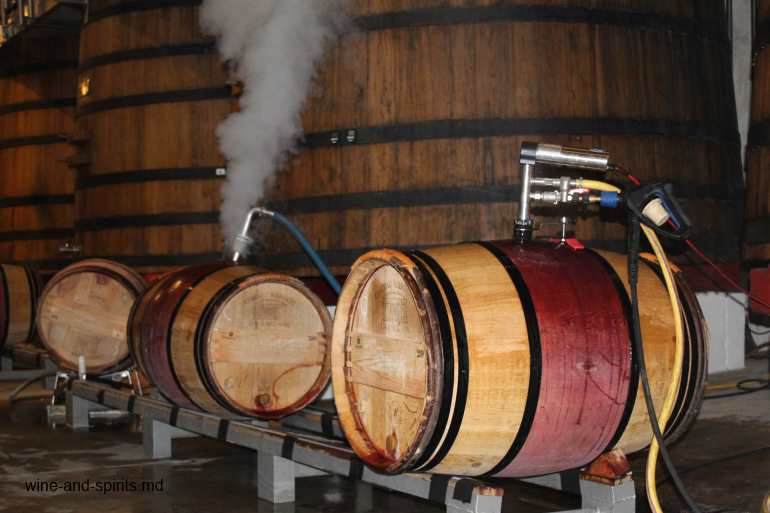
Only after a short period of ageing, with the wines still kept separate by grape variety and vineyard plot, is the decision made about the blends. This usually takes place in February. Several people, including the owners, taste and assess the wines. They select the blend for the first wine (“Château Margaux”), the second wine (“Pavillon Rouge du Château Margaux”), and then the third wine (“Margaux du Château Margaux”). They also decide which batches will be declassified and sold in bulk.
The purpose of these tastings is not to select the best individual plots, but to create a harmonious blend. Sometimes a particular lot may be outstanding on its own, but it does not suit a specific blend. In that case, it will not be selected. The objective is harmony and consistency from one vintage to another.
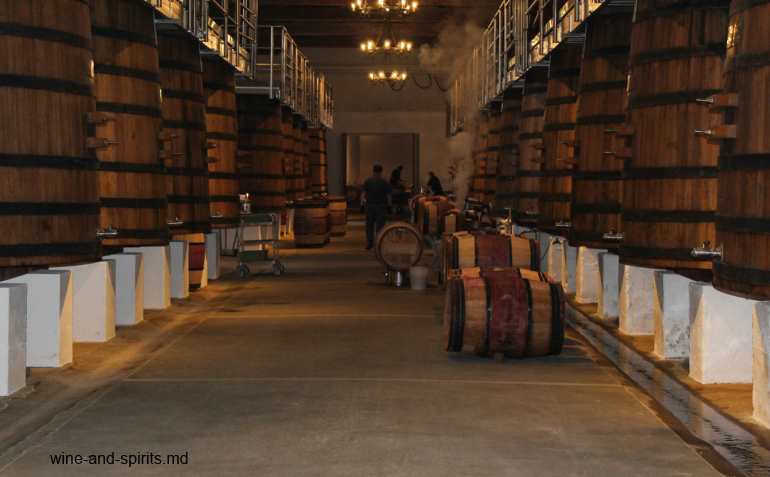
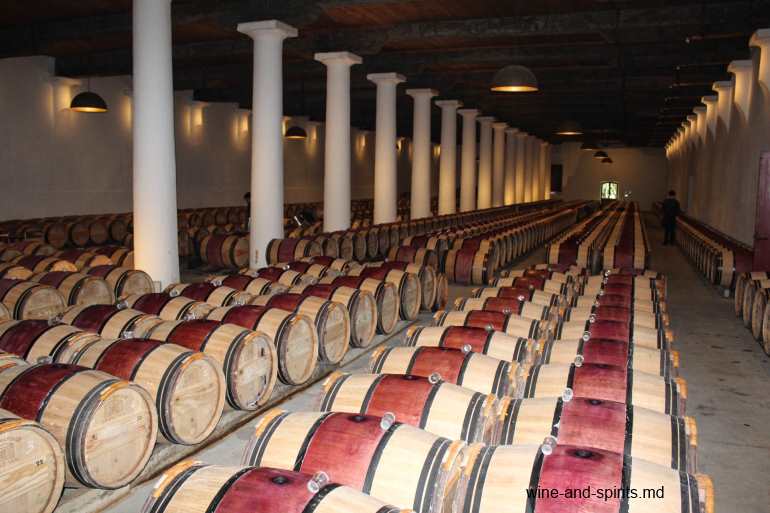
The main barrel size for red wines is 225 litres. The barrels containing red wines are stored in two cellars. One is above ground and dates back to 1815. Pay attention to its columns, wooden ceiling and lighting fixtures. This room looks more like a grand hall than an industrial facility. It houses 600 barrels of the 2022 vintage, kept separate by grape variety and vineyard plot.
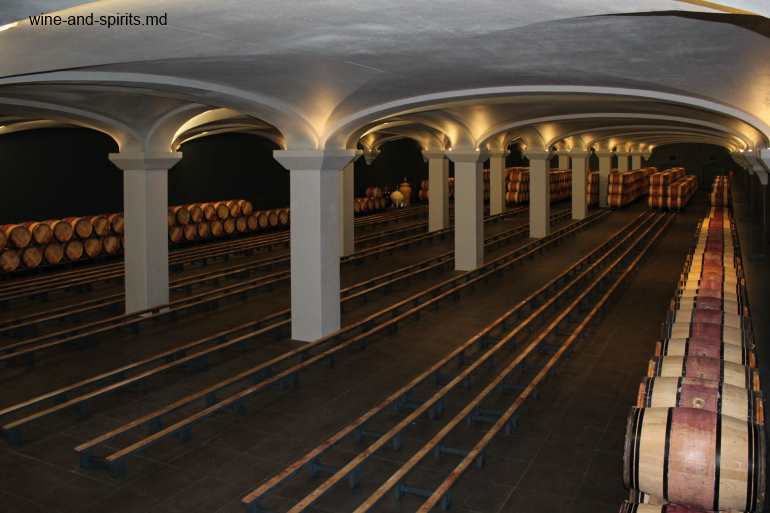
The second cellar is underground and was built in 1982. In 2019, it was modernized with new technologies that allow more precise control of temperature and humidity. This is also a genuine work of architecture, rather than simply a place for storing barrels. Its white columns rise into white vaulted ceilings that resemble those of a cathedral more than a wine cellar. Some of the barrels containing the 2021 vintage, intended for the third wine, were emptied for bottling.
The ageing periods in barrels are as follows: 20–24 months for “Château Margaux”, 18–20 months for “Pavillon Rouge du Château Margaux” and 15–16 months for “Margaux du Château Margaux”.
The cooperage
The château has preserved its traditional cooperage, where only one person works. He assembles barrels from ready-made, fully dried staves of French oak grown in central France. It takes approximately four hours to make one barrel. The next stage is toasting.
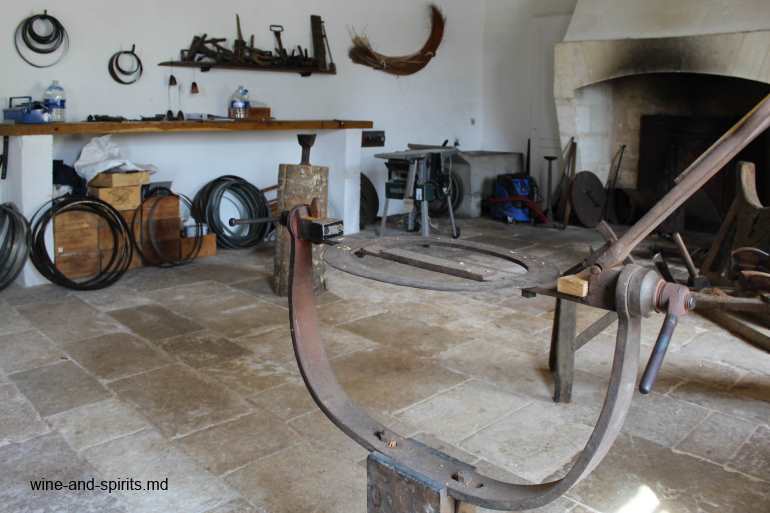
The winery uses barrels with different levels of toast, although medium toast is the main choice. In Bordeaux, it is customary to use chestnut wood for the hoops around the edges of the barrels to protect the oak from pests.
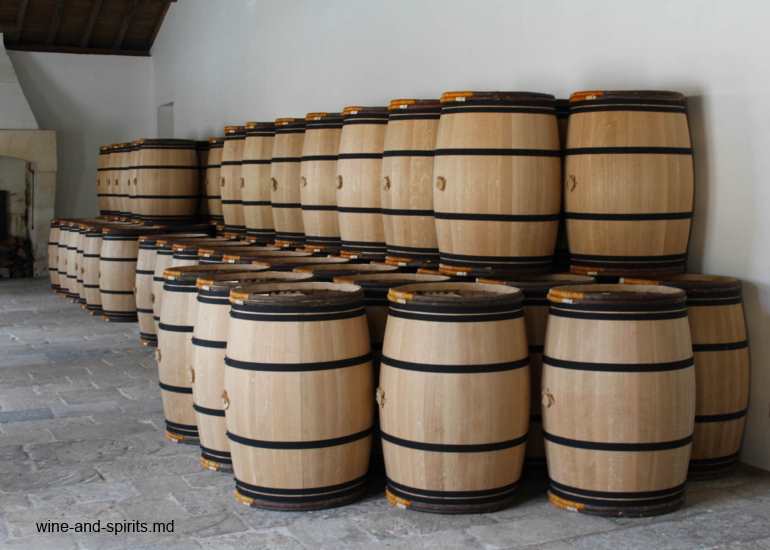
The cooperage produces approximately 200 barriques (225 litres each) per year for red wines. This accounts for one-third of the château’s requirements. The remaining barrels are purchased from several cooperages.
Most barrels are filled for two vintages. The first wine is aged in 100% new oak. For the second wine, the proportion is approximately 50%, and for the third wine, 30%.
Château Margaux wines
An underground collection has been built at the château to house all the vintages in the producer’s possession. The oldest dates back to 1848. The collection contains approximately 200,000 bottles. Guests visiting Château Margaux can admire this treasure only through the glass wall of the tasting room.
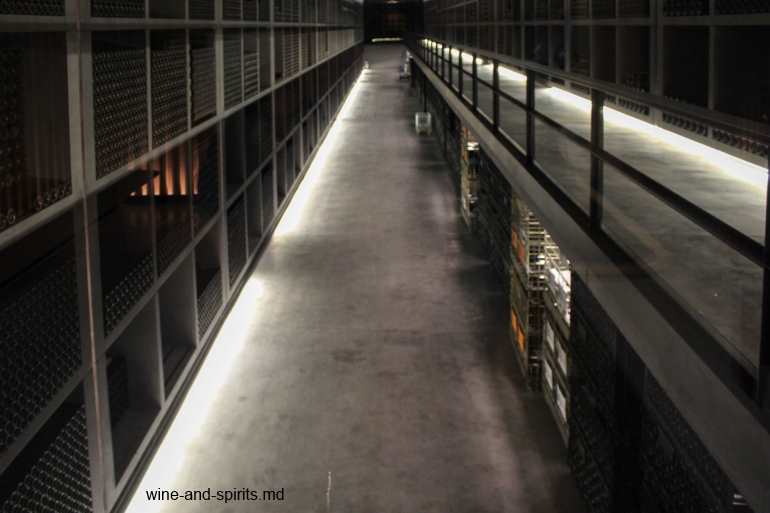
Annual production amounts to approximately 280,000 bottles:
– “Château Margaux” – 120,000 bottles.
– “Pavillon Rouge du Château Margaux” – 100,000 bottles.
– “Margaux du Château Margaux” – 50,000 bottles.
– “Pavillon Blanc du Château Margaux” – 10,000 bottles.
The fourth wine is sold in bulk, and its volume depends on the harvest. It is important to note that the estate has been producing its Grand Vin every year for several decades.
Bordeaux winemakers usually limit themselves to a first and second wine. At Château Margaux, however, the internal quality standards were continually raised, and the selection of batches became increasingly rigorous. Starting in 1997, the estate began selecting a third wine, which was sold in bulk. This also improved the quality of the second wine.
However, the 2009 harvest was so exceptional that it would have been a sin to sell the third wine in bulk. It was bottled instead, giving life to “Margaux du Château Margaux”, which was released onto the market in September 2013.
Historically, the white wine appeared at Château Margaux because the estate began vinifying white grapes separately from red ones. The wine sold in the 19th century under the name “Château Margaux vin de sauvignon” was renamed “Pavillon Blanc du Château Margaux” in 1920. Its label has remained unchanged ever since. However, in 2009–2010, both the production technology and the grape selection process were reviewed.
Pavillon Rouge du Château Margaux 2015 AOC Margaux
The 2015 harvest was outstanding for Bordeaux. It was also a special year for the château, as the estate celebrated the 200th anniversary of Château Margaux’s architecture and the opening of its new facilities.
This wine accounted for 23% of the harvest. According to the producer, the style of “Pavillon Rouge du Château Margaux 2015” continues to move closer to that of the Grand Vin. It is probably the finest “Pavillon Rouge” the estate has ever made.
The blend consists of 74% Cabernet Sauvignon, 21% Merlot, 4% Petit Verdot and 1% Cabernet Franc. I was poured wine from a bottle that had already been opened, which was good for allowing it to develop in the glass.
It has a beautiful, complex bouquet featuring violets, spices, vibrant, juicy cherry, blackcurrant, plum and sweet tannins. In terms of texture, it is silk rather than wine. Its delicate, fresh fruit flavour echoes the aromas, leading into a long, beautiful finish with a slight mineral note.
The producer states that the wine has a cellaring potential of 20–30 years. And I find myself thinking: “Why wait so long when the wine is already so wonderful? Unless, of course, one wants more tertiary notes and less fruitiness…”
We don’t like the expression ‘second wine’ because, for us, there is no difference in quality. It is simply a different character. These wines have a great deal in common,” noted Emmanuelle Roullot, who showed me around the château.

Château Margaux 2011 Grand Vin Premier Grand Cru Classé
Of the 2011 harvest, 38% of the grapes grown were allocated to the first wine. The Château Margaux blend consists of 86% Cabernet Sauvignon, 10% Merlot, 2% Petit Verdot and 2% Cabernet Franc.
In October 2018, seven years later, the winemakers described it as the most concentrated wine they had ever produced. This is explained by the fact that the 2011 harvest, at 29 hectolitres per hectare (one-third of the usual volume), was the smallest in the previous 20 years. “And yet we barely notice its tannins,” the château’s winemakers remarked.
I tasted this wine from a bottle that had already been opened, which gave it a chance to breathe. Of course, it would have been better to decant it.
Nevertheless, “Château Margaux 2011” makes an impression of austere, elegant classicism. It is a wine with tremendous reserves of vitality, yet it is refined. Almost 12 years old, it is still young and fresh, with velvety tannins. At first, the bouquet reveals aromas of ageing: noble leather and truffle against a background of dark fruit. A hint of blackberry dusted with white pepper shyly emerges through the delicate aroma of an expensive cigar.
A sip gently envelops the palate, offering a succession of different flavours before ending in a long finish. There is no astringency whatsoever, yet the taste remains fresh and vibrant, never tired.
I would have liked more time to observe how this masterpiece unfolds. I particularly admire the way the oak is integrated into the wine, without ever standing out. “Château Margaux 2011” is showing beautifully, and ageing serves only to reveal its virtues.
They don’t need advertising
Château Margaux wines do not need advertising. They do not enter international competitions to confirm their quality with medals. The producer does not exhibit at “ProWein” in Düsseldorf, the most important wine trade fair in the world. But why should it, when most of its wines are sold as En Primeur?
The promotion of our wines is carried out mainly by Château Margaux representatives in different markets. They organize seminars with sommeliers and distributors, as well as dinners with collectors. We do nothing directly,” I was told at the château.
The producer’s promotional activity is largely limited to events such as the exceptional dinner held at the Louvre Museum for members of the Chief Executive Organization on the occasion of their visit to Paris in May 2019. The evening was part of the seminar “The Business of Luxury: A Meeting with the Leaders of the Global Luxury Industry in Paris”. The wines served included “Pavillon Blanc du Château Margaux 2016” and “Château Margaux” vintages 2003, 2000 and 1990.
Another exceptional dinner was held in New York in November 2019, organized by Corinne Mentzelopoulos and the Friends of Notre-Dame de Paris Foundation. The event was intended to support the foundation’s fundraising campaign for the restoration of Notre-Dame Cathedral, which had been severely damaged by the fire in April 2019. During the dinner, more than 100 prominent American donors and collectors had the opportunity to taste Château Margaux wines.
In other words, these wines are associated with something truly exceptional.
Update, 30 June:
The En Primeur prices have been announced.
“Château Margaux 2022 Grand Vin Premier Grand Cru Classé” is priced at €729.84 per bottle (including tax).
“Pavillon Rouge du Château Margaux 2022 AOC Margaux” – €214 per bottle (including tax).
“Pavillon Blanc du Château Margaux 2022” – €375.84 per bottle (including tax).
Delivery is scheduled for early 2025.
Related articles:
Château Margaux: Only the Fifth Wine in 500 Years!
P.S.: If you enjoy the wine-and-spirits.md website, you can help support its work financially via patreon or PayPal (angeltar387@gmail.com).
